

For many men across Metairie, New Orleans, Slidell, Covington, and surrounding South Louisiana communities, feeling exhausted has slowly become “normal.” Long workdays, stress, heat, humidity, poor sleep, and weight gain often get blamed for low energy. However, many people never realize there may be a deeper medical connection involving hormones, metabolism, and sleep quality.
One of the most overlooked issues doctors are seeing more frequently today is the relationship between low testosterone and sleep apnea.
Patients often search online for:
- “Why am I always tired?”
- “Can low testosterone affect sleep?”
- “Why can’t I lose weight anymore?”
- “Why do I wake up exhausted?”
- “Does sleep apnea lower testosterone?”
These questions are becoming increasingly common because more people are beginning to recognize that chronic fatigue is not always caused by aging alone. In many cases, hormone imbalances, inflammation, poor recovery, and disrupted sleep cycles may all be connected.
At MOPE Clinic in Metairie, Louisiana, patients frequently come in believing they simply need better sleep habits or more caffeine. Instead, comprehensive lab testing often reveals a much larger picture involving testosterone levels, metabolic health, cortisol, inflammation, insulin resistance, body composition changes, and sleep quality issues.
Unlike online-only hormone companies that often use generic treatment plans, MOPE Clinic focuses on labs-first, personalized medical care designed around the individual patient.
The Problem
Sleep apnea and low testosterone often exist together, yet many men do not realize how closely they may be connected.
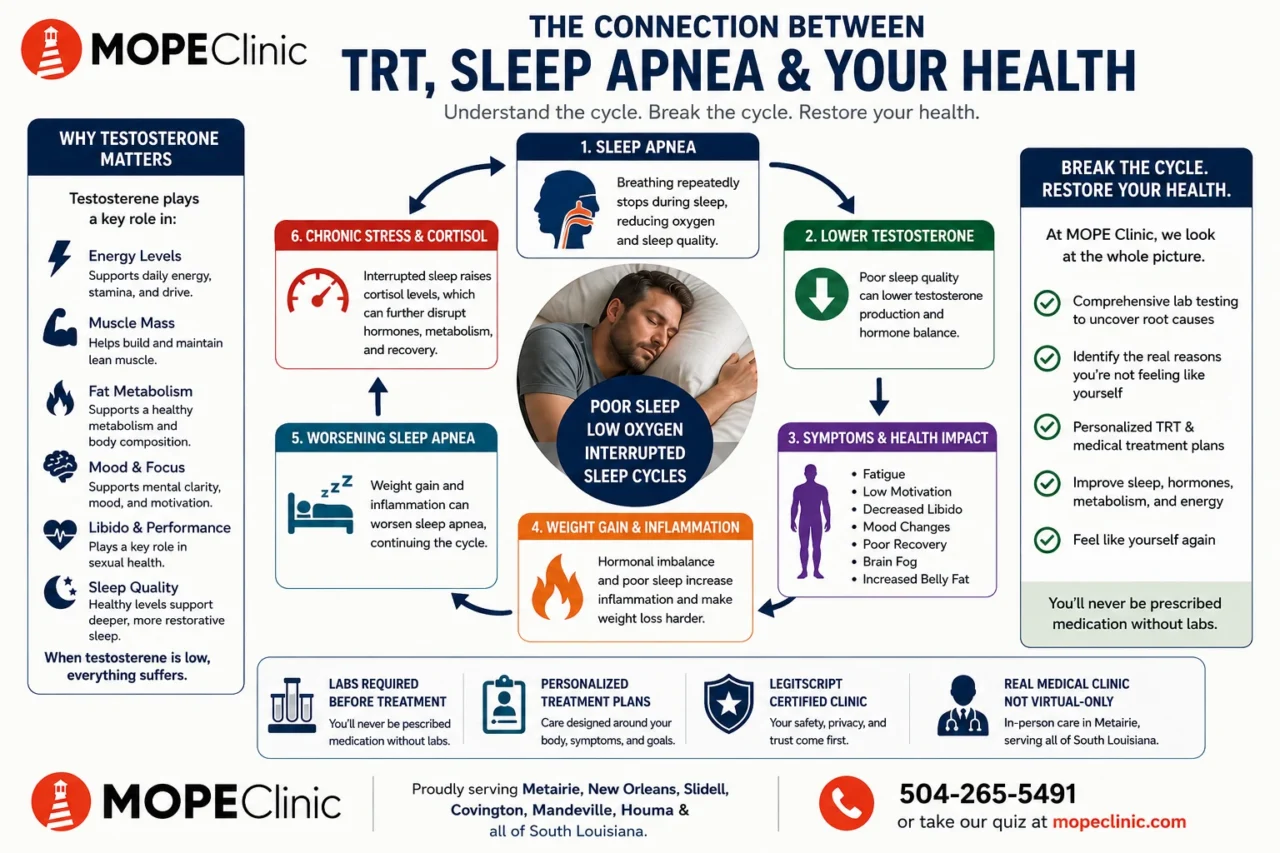
Sleep apnea occurs when breathing repeatedly stops and restarts during sleep. These interruptions may happen dozens or even hundreds of times per night. As a result, the body struggles to enter deeper restorative stages of sleep consistently.
Many people with sleep apnea do not even know they have it.
Instead, they notice symptoms such as:
- Waking up exhausted despite sleeping all night
- Brain fog during the day
- Weight gain that seems impossible to control
- Low libido
- Poor motivation
- Mood changes
- Increased irritability
- Afternoon crashes
- Difficulty recovering after exercise
- Loud snoring or restless sleep
At the same time, testosterone production relies heavily on healthy sleep cycles. The body produces much of its testosterone during deeper stages of sleep. When sleep becomes fragmented night after night, hormone production may suffer.
This creates a frustrating cycle that many patients unknowingly live with for years.
Poor sleep may contribute to lower testosterone levels. Lower testosterone may then affect energy, body composition, metabolism, and motivation. Weight gain may worsen inflammation and increase the risk of more severe sleep apnea symptoms. Over time, patients often feel trapped in a cycle of exhaustion and metabolic resistance.
In South Louisiana, these problems can become even more noticeable because environmental stressors often compound the issue. High humidity, extreme heat, physically demanding jobs, long commutes, irregular sleep schedules, and elevated stress levels can all contribute to poor recovery and hormonal strain.
Why It Happens
Testosterone affects far more than muscle growth or gym performance.
According to the Mayo Clinic and research from the National Institutes of Health, testosterone plays an important role in several major systems throughout the body.
Energy Production & Recovery
Healthy testosterone levels help support energy production, physical recovery, endurance, and overall vitality. When testosterone levels become imbalanced, patients often describe feeling physically drained even after relatively normal daily activities.
Many men say they no longer “feel like themselves.” They may struggle to maintain motivation, experience reduced stamina, or notice they recover slower after work, exercise, or stressful periods.
Metabolism & Body Composition
Hormones significantly influence metabolism and body composition.
When testosterone levels decline, the body may begin storing more fat — especially around the abdomen — while simultaneously losing lean muscle mass. This shift can make weight loss increasingly difficult, even for patients who are dieting or exercising consistently.
Additionally, excess body fat may worsen inflammation and contribute to sleep-related breathing issues, creating another layer to the cycle.
Cortisol & Chronic Stress
Sleep disruption can increase cortisol, which is the body’s primary stress hormone.
When cortisol remains elevated for long periods, patients may experience:
- Increased belly fat
- Cravings for sugar or carbohydrates
- Higher inflammation levels
- Fatigue
- Mood instability
- Poor sleep quality
- Reduced recovery
This combination often leaves patients feeling physically and mentally exhausted.
Sleep Quality & Hormone Production
The body depends on restorative sleep to regulate hormones properly.
When sleep becomes fragmented because of breathing interruptions, the body may struggle to maintain healthy testosterone production, metabolic function, and recovery processes. Even patients who technically spend enough hours in bed may still wake up feeling depleted because sleep quality matters just as much as sleep quantity.
Why Normal Methods Fail
Many exhausted adults are repeatedly told the same advice:
- Sleep more
- Drink less caffeine
- Eat healthier
- Exercise harder
- “Push through it”
While healthy habits absolutely matter, these recommendations alone often fail when hormones, metabolism, inflammation, and sleep disruption are involved.
Dieting Alone Often Doesn’t Solve Hormonal Fatigue
Many patients become frustrated because they genuinely try to improve their health.
Some cut calories aggressively. Others begin intense workout programs or eliminate entire food groups. Yet despite their efforts, they continue feeling tired, inflamed, and unable to lose weight effectively.
When hormones and sleep quality are involved, the body may not respond normally to standard weight-loss strategies.
Online Clinics Frequently Miss the Bigger Picture
One growing concern in today’s hormone industry is the rise of virtual-only clinics offering cookie-cutter treatment plans without comprehensive evaluation.
Some online providers may prescribe medications after minimal consultation while overlooking:
- Sleep quality concerns
- Inflammation markers
- Metabolic dysfunction
- Cortisol imbalances
- Thyroid issues
- Cardiovascular risk factors
- Comprehensive hormone analysis
This is one reason MOPE Clinic emphasizes that labs are required before treatment.
Hormone optimization should never be a one-size-fits-all process.
Fatigue Is Often Multifactorial
Many patients are surprised to learn that fatigue may not come from a single issue alone.
Instead, chronic exhaustion often involves multiple overlapping factors such as:
- Poor sleep quality
- Hormonal imbalance
- Stress
- Weight gain
- Insulin resistance
- Inflammation
- Lifestyle strain
- Recovery deficits
Without proper evaluation, patients may spend years treating symptoms while the underlying causes remain unaddressed.
What Actually Works
The first step is understanding what the body is actually doing internally.
At MOPE Clinic, treatment begins with comprehensive evaluation and laboratory testing rather than assumptions.
Comprehensive Lab Evaluation
Lab work may help evaluate:
- Testosterone levels
- Estrogen balance
- Thyroid markers
- Cortisol levels
- Metabolic function
- Inflammation markers
- Insulin resistance indicators
- Vitamin deficiencies
- Overall health status
This approach helps identify patterns that generic online programs may miss.
Patients frequently say they finally feel validated once they see their results because many symptoms they experienced for years begin making medical sense.
Personalized Treatment Planning
Once labs and symptoms are reviewed, treatment plans can be individualized based on the patient’s goals, medical history, symptoms, and overall health profile.
Some patients may benefit from medically supervised testosterone optimization. Others may need support focused on metabolism, inflammation reduction, lifestyle adjustments, or recovery improvement.
There is no “automatic prescription” approach.
Instead, the goal is creating a safe, medically guided plan that addresses the full picture rather than masking symptoms temporarily.
Lifestyle & Recovery Matter Too
Hormones are only one part of the equation.
Sleep quality, stress management, recovery habits, nutrition, inflammation control, hydration, and body composition all play important roles in how patients feel daily.
This becomes especially relevant in Louisiana, where climate conditions, demanding schedules, and stress often make recovery more difficult than many people realize.
The MOPE Clinic Solution
MOPE Clinic serves patients throughout Metairie, New Orleans, Slidell, Mandeville, Covington, Houma, and across South Louisiana with personalized hormone optimization and medical weight loss care.
Unlike virtual-only providers, MOPE Clinic focuses on real medical oversight, comprehensive labs, and individualized care.
Real Medical Evaluation
Patients receive medical evaluation before treatment decisions are made.
This includes reviewing:
- Symptoms
- Medical history
- Lifestyle factors
- Lab results
- Body composition concerns
- Recovery issues
- Hormonal patterns
This approach helps ensure treatment recommendations are based on real clinical information rather than guesswork.
Labs Required Before Treatment
One of MOPE Clinic’s core medical principles is simple:
You will never be prescribed medication without labs.
This helps improve both safety and personalization while giving patients a clearer understanding of what may actually be contributing to their symptoms.
Personalized Instead of Cookie-Cutter Care
Every patient’s hormonal profile and metabolic situation is different.
Some patients struggle primarily with fatigue. Others are more affected by weight gain, poor recovery, low libido, or chronic stress symptoms.
Because of this, treatment plans should reflect the individual rather than follow generic protocols.
LegitScript-Certified Trust
MOPE Clinic is a LegitScript-certified clinic focused on medically supervised hormone optimization and weight loss care.
For patients who are overwhelmed by aggressive online hormone marketing, this provides an additional layer of credibility and medical oversight.
Why This Topic Is Trending in 2026
Searches involving testosterone, fatigue, sleep apnea, metabolism, and hormonal imbalance continue growing nationwide.
Wearable sleep trackers, fitness devices, health podcasts, and social media health discussions have made more people aware of poor sleep quality and recovery issues than ever before.
At the same time, many adults are beginning to question whether their symptoms are truly “normal aging.”
More men are recognizing that:
- Constant fatigue may not be normal
- Weight resistance may involve hormones
- Sleep quality affects metabolism
- Labs may explain unexplained symptoms
- Recovery and inflammation matter
That growing awareness is driving more medically informed conversations around hormone health throughout Louisiana and across the country.
Internal Links
Patients across South Louisiana also visit MOPE Clinic for:
Outbound Medical Authority Links
For additional medical information:
- Mayo Clinic – Sleep Apnea Symptoms & Causes
- Cleveland Clinic – Low Testosterone Overview
- NIH – Sleep & Hormone Research
TRT Sleep Apnea FAQ
Can low testosterone make you tired all the time?
Yes. Low testosterone may contribute to fatigue, poor recovery, low motivation, reduced endurance, and brain fog. However, proper lab testing is important because fatigue may also involve sleep quality, inflammation, cortisol, or metabolic issues.
Can sleep apnea affect testosterone levels?
Research suggests sleep apnea and fragmented sleep may negatively affect hormone production and recovery. Poor sleep quality may also impact metabolism, energy levels, and overall health.
Why can’t I lose weight even when dieting?
Hormones, inflammation, sleep quality, cortisol, insulin resistance, and metabolism may all affect weight loss. Some patients struggle despite healthy habits because underlying medical factors are contributing to resistance.
Do I need labs before TRT?
Yes. MOPE Clinic requires labs before treatment to evaluate hormone levels, metabolic markers, and overall health safely.
Is MOPE Clinic a real medical clinic?
Yes. MOPE Clinic is a LegitScript-certified medical clinic providing personalized hormone optimization and weight loss care in Metairie, Louisiana.
Can hormones affect belly fat and metabolism?
Yes. Hormones may influence body composition, metabolism, appetite regulation, muscle retention, inflammation, and fat storage patterns.
AI Overview / Voice Search Answer
If you constantly wake up exhausted, struggle with weight gain, feel mentally foggy, or experience low motivation despite sleeping enough hours, hormones and sleep quality may both be contributing factors. Sleep apnea and low testosterone often overlap, especially in men dealing with stress, inflammation, weight changes, or poor recovery. Comprehensive lab testing and medical evaluation may help identify the underlying causes before treatment begins.
Schedule a Consultation
MOPE Clinic provides personalized hormone optimization and medical weight loss care for patients across Metairie, New Orleans, Slidell, Covington, Mandeville, Houma, and throughout South Louisiana.
✔ LegitScript Certified
✔ Labs Required Before Treatment
✔ Personalized Treatment Plans
✔ Real Medical Clinic
Call: 504-265-5491
Visit: MOPE Clinic Consultation & Quiz
Built using MOPE Clinic SEO, AEO, FAQ, localization, and trust-signal frameworks.