

Quick Answer
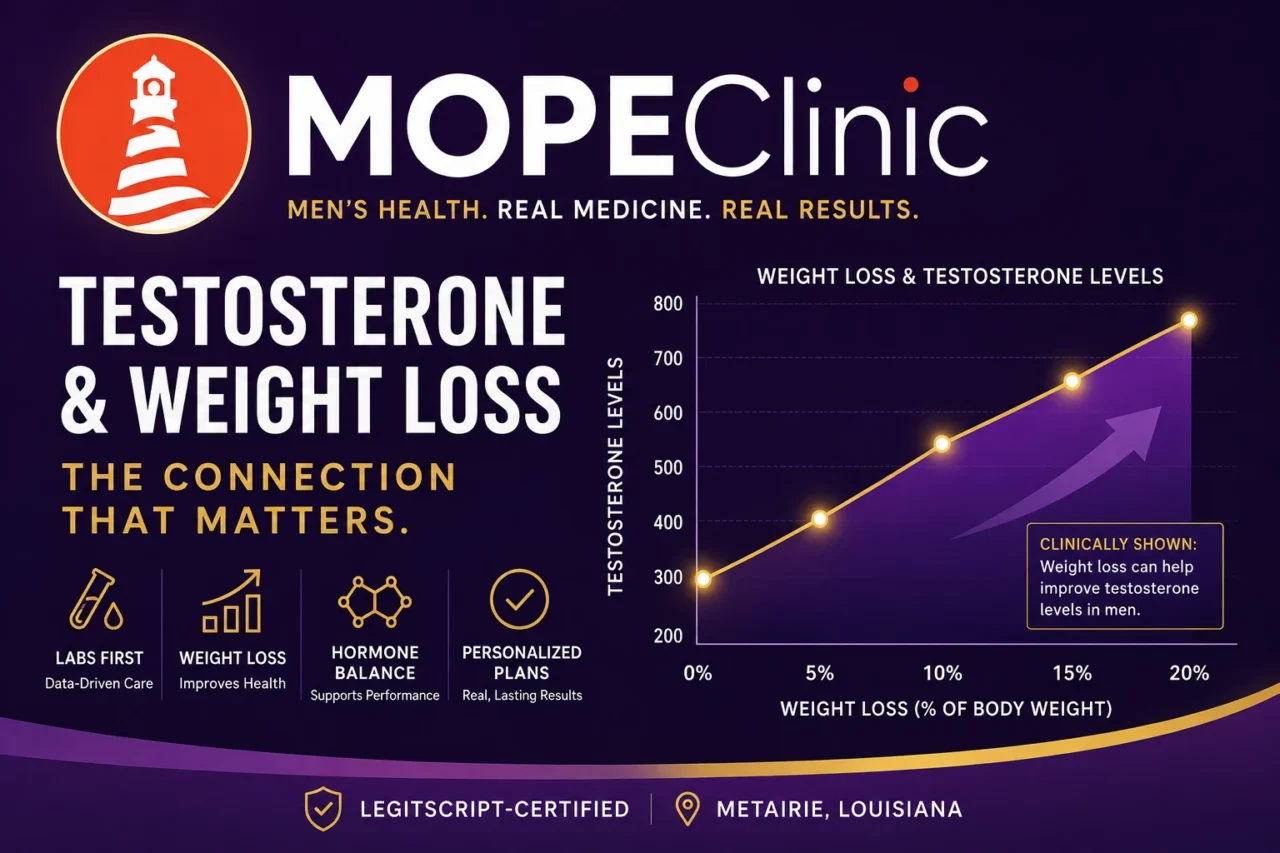
Yes, losing excess body fat may help improve testosterone levels in some men, particularly when low testosterone is connected to obesity, poor sleep, insulin resistance, or other metabolic concerns. Still, weight loss will not correct every cause of low testosterone. Symptoms, health history, and properly timed laboratory testing must be reviewed before deciding whether lifestyle changes, medical weight management, testosterone therapy, or another approach is appropriate.
Testosterone and weight loss are often discussed as if one injection or one diet can fix everything. In real life, the relationship is more complicated.
Some men gain weight after their energy, muscle mass, sleep quality, or testosterone levels decline. Meanwhile, excess body fat can influence hormone signaling and make low-testosterone symptoms more noticeable. That cycle can leave someone feeling tired, frustrated, and unsure where to begin.
At MOPE Clinic in Metairie, we do not assume that every man with belly fat needs testosterone. We also do not assume that every man with low testosterone only needs to “eat less and exercise more.” Instead, we start with a real medical evaluation and required laboratory testing.
The Main Takeaway
Low testosterone and weight gain may occur together, but neither should be treated through guesswork. The correct plan depends on your symptoms, labs, medical history, sleep, body composition, medications, and long-term health goals.
The Problem: Low Testosterone and Weight Loss Can Become a Cycle
Many men first notice the problem when their waistline changes. They may eat roughly the same foods and follow the same routine, yet fat begins collecting around the abdomen. At the same time, workouts feel harder, muscle becomes more difficult to maintain, and recovery takes longer.
Other symptoms may appear gradually. These can include low energy, reduced sex drive, mood changes, poor concentration, restless sleep, erectile difficulties, or a general loss of motivation.
However, these symptoms are not exclusive to low testosterone. Sleep apnea, thyroid problems, diabetes, insulin resistance, medication effects, depression, chronic stress, and inadequate sleep may cause similar concerns.
That is why symptoms alone cannot confirm a testosterone deficiency. Proper testing matters.
Lower Energy
Fatigue can make regular exercise and meal preparation feel harder.
Reduced Muscle
Changes in muscle mass can affect strength, activity, and body composition.
Poor Sleep
Interrupted sleep can affect appetite, recovery, energy, and hormone function.
Less Activity
Feeling drained can lead to more sitting and fewer healthy daily choices.
Why It Happens: How Body Fat May Affect Testosterone
Body fat is not simply stored energy. Fat tissue also plays an active role in hormone and metabolic processes.
In some men with obesity, hormone signaling between the brain and testes may become disrupted. In addition, an enzyme called aromatase is present in fat tissue and helps convert testosterone into estrogen. More body fat may increase this conversion, although the effect differs from person to person.
Obesity can also occur alongside insulin resistance, inflammation, poor-quality sleep, and obstructive sleep apnea. Each of these concerns may influence energy, hormone production, appetite, and body composition.
Recent endocrine research suggests that clinically meaningful weight loss can reverse some obesity-related testosterone reductions. Research has also found an association between weight loss from anti-obesity medication and improved testosterone levels in some men with obesity or type 2 diabetes.
Still, that does not mean every case of low testosterone will resolve with weight loss. A pituitary disorder, testicular condition, previous injury, medication, genetic condition, or another medical issue may be involved. Therefore, an individualized evaluation remains essential.
Does belly fat cause low testosterone?
Excess abdominal fat may contribute to lower testosterone in some men. However, belly fat does not prove that someone has a testosterone deficiency. Blood testing and a medical evaluation are needed to understand what is actually happening.
Explore MOPE Clinic
Choose the Next Step That Fits Your Concerns
Learn more about testosterone treatment, medical weight management, or why MOPE Clinic requires laboratory testing before prescribing medication.
Explore Testosterone Therapy
See how symptoms, labs, medical history, and follow-up monitoring shape personalized TRT care.
Explore Medical Weight Loss
Learn how medically supervised care may support healthier and more sustainable weight management.
Understand Why Labs Matter
Discover why medical decisions should begin with objective lab data instead of online wellness trends.
Why Normal Weight-Loss Methods Sometimes Fail
Many patients arrive after trying restrictive diets, random supplements, fasting plans, or workout programs copied from social media. Those methods can produce short-term changes, but they rarely account for the entire medical picture.
For example, a person who sleeps five hours per night may experience increased hunger, poor workout recovery, and daytime fatigue. Another patient may have untreated sleep apnea. Someone else may have a thyroid condition, insulin resistance, low testosterone, or a medication that affects weight.
South Louisiana life can add practical obstacles as well. Long workdays, family obligations, restaurant meals, festivals, alcohol, extreme summer heat, and heavy humidity can make consistency more difficult. Outdoor activity may also drop during the hottest months.
The answer is not to blame yourself. Instead, identify the barriers that are actually affecting your body and build a plan that works in your real life.
Testosterone Is Not a Standalone Weight-Loss Drug
Testosterone therapy is intended for appropriately evaluated patients with symptoms and confirmed testosterone deficiency. It should not be prescribed simply because someone wants to lose weight or build muscle faster.
For a man with true hypogonadism, medically supervised therapy may help address certain symptoms and support healthier body composition. However, nutrition, resistance training, sleep, metabolic health, and regular monitoring still matter. Testosterone does not replace those foundations.
What Actually Works for Testosterone and Weight Loss
A successful plan starts by determining whether low testosterone is present, whether excess weight is contributing to the problem, and whether another health condition needs attention.
Depending on the patient, the plan may involve nutrition changes, resistance training, improved sleep, medical weight management, treatment of a related condition, testosterone therapy, or a combination of approaches.
Review Your Symptoms
Energy, sleep, libido, mood, strength, weight changes, and recovery all provide useful context.
Complete Real Labs
Testing helps separate confirmed hormone deficiency from conditions with similar symptoms.
Build a Personal Plan
Your treatment should reflect your results, health history, goals, and Louisiana lifestyle.
What Labs May Be Considered Before Treatment?
The exact testing plan depends on your symptoms, age, medical history, and provider’s clinical judgment. A testosterone evaluation may include morning total testosterone testing and, when appropriate, repeat testing to confirm the result.
Additional testing may help your provider understand the broader picture. This could include blood count, metabolic markers, thyroid testing, prostate-related screening when appropriate, and other hormone measurements.
National endocrine guidelines recommend diagnosing hypogonadism only when a patient has compatible symptoms and consistently low testosterone concentrations. In other words, one vague symptom or one poorly timed test should not automatically lead to a prescription.
MOPE Clinic’s Labs-First Promise
You will never be prescribed medication without labs. Treatment recommendations are made only after a medical intake, clinical evaluation, and review of the information needed to determine medical necessity.
DIY Tips: Healthy Steps You Can Start Now
You cannot diagnose or treat low testosterone at home. However, several practical habits may support metabolic health while you arrange a proper evaluation.
Keep a regular bedtime and discuss loud snoring, gasping, morning headaches, or severe daytime sleepiness with a healthcare professional.
Start with a manageable full-body routine two or three times per week. Increase gradually rather than trying to transform your body in seven days.
Include a protein source, vegetables or fruit, and a sensible portion of carbohydrates or healthy fats. You do not need a punishment diet.
During hot and humid months, walk early, choose an indoor location, and pay attention to hydration and heat illness warnings.
Supplements cannot confirm why your levels are low, and product quality or ingredient claims may vary. Start with medical testing instead.
Do Not Obtain Testosterone Without Medical Supervision
Testosterone can affect red blood cell levels, fertility, prostate monitoring, sleep apnea, and other health considerations. Safe care requires appropriate screening, dosing, follow-up labs, and clinical oversight.
The MOPE Clinic Solution
MOPE Clinic is a real medical clinic located at 4417 Lorino Street, Suite 103, in Metairie. We are not a virtual-only prescription provider, and we do not prescribe testosterone or weight-loss medication from an online questionnaire alone.
Labs are required before treatment. After reviewing your results, symptoms, health history, and goals, your provider can explain what may be contributing to your weight or hormone concerns.
When treatment is medically appropriate, your plan is personalized. It may include hormone optimization, medically supervised weight management, lifestyle support, follow-up testing, or coordination with another healthcare professional.
MOPE Clinic serves patients from Metairie, New Orleans, Kenner, Slidell, Covington, Mandeville, Houma, Thibodaux, and communities throughout South Louisiana.
Real Medical Clinic
Labs Before Treatment
Personalized Plans
LegitScript-Certified
Ready to Discuss Your Symptoms and Lab Work?
Schedule a consultation at MOPE Clinic or take the short OPE quiz to help the clinic understand your concerns.
Learn More From Trusted Medical Sources
Reliable medical information should come from established clinical and research organizations. These resources provide additional information about testosterone deficiency, obesity care, and medically supervised treatment.
Endocrine Society
Review clinical guidance for evaluating and treating testosterone deficiency.
Cleveland Clinic
Read patient information about TRT, monitoring, potential benefits, and possible risks.
PubMed
Explore clinical research emphasizing individualized, complication-focused obesity care.
Related MOPE Clinic Resources
Men’s Health
Testosterone Replacement Therapy
Learn how MOPE evaluates symptoms, labs, treatment options, and ongoing monitoring.
Metabolic Care
Medical Weight Loss
Explore personalized weight-management care backed by medical screening and supervision.
Healthy Aging
Maintaining Muscle Mass
See why muscle supports metabolism, mobility, strength, and long-term independence.
Labs-First Care
Why Health Optimization Starts With Labs
Understand why symptoms and social media trends should never replace objective medical data.
Frequently Asked Questions
Can losing weight increase testosterone naturally?
Meaningful weight loss may improve testosterone levels in some men, especially when low levels are connected to obesity or metabolic health. However, the result varies, and weight loss will not correct every cause of testosterone deficiency.
Does low testosterone make it harder to lose belly fat?
Low testosterone may occur alongside reduced muscle, fatigue, and changes in fat distribution. Those factors can make weight management feel harder. Still, sleep, nutrition, medications, thyroid health, insulin resistance, and activity also need to be considered.
Will TRT make me lose weight?
TRT is not a general weight-loss treatment. For appropriately diagnosed men, treatment may help improve certain symptoms and support healthier body composition. Results vary, and nutrition, activity, sleep, and metabolic health still matter.
Do I need labs before testosterone therapy?
Yes. Symptoms alone cannot diagnose low testosterone. Properly timed blood testing and a medical evaluation help confirm whether a deficiency exists and whether treatment is medically appropriate. MOPE Clinic requires labs before treatment.
Can GLP-1 weight-loss medication improve testosterone?
Emerging research suggests that testosterone levels may improve as some men with obesity lose weight while using anti-obesity medications. This does not mean GLP-1 therapy is right for everyone. Eligibility, risks, benefits, and monitoring should be discussed with a qualified medical provider.
Is MOPE Clinic only an online hormone provider?
No. MOPE Clinic is a real, physical medical clinic in Metairie, Louisiana. Patients receive a clinical evaluation, required labs, personalized recommendations, and ongoing medical oversight. MOPE is not a virtual-only prescription service.
Where can I get tested for low testosterone near New Orleans?
MOPE Clinic is located in Metairie and serves patients from New Orleans, Kenner, the North Shore, Houma, and communities across South Louisiana. Call 504-265-5491 to discuss testing and consultation options.
Stop Guessing
Find Out What Your Labs Actually Say
If stubborn weight gain, fatigue, low drive, poor recovery, or reduced muscle sound familiar, schedule a real medical evaluation at MOPE Clinic in Metairie.
LegitScript-certified • Labs required before treatment • Personalized treatment plans • Real clinic, not virtual-only