

Peptide therapy news is suddenly everywhere. Local television segments, national headlines and social media videos are discussing peptides for weight management, recovery, hormone support and healthy aging.
That attention can help patients ask better questions. At the same time, it can create confusion. Seeing a peptide discussed on television does not mean every product sold under that name has received FDA approval.
For adults in Metairie, New Orleans and across South Louisiana, the most important question is not, “Which peptide is trending?” Instead, it is, “What do my symptoms, medical history and laboratory results show that I may actually need?”
Quick Answer
Peptides are not one single type of treatment.
Some peptide-based medications have FDA-approved uses. Other peptides may be compounded when legally and medically appropriate. Still others are sold only as research products and should not be used for self-treatment. A qualified provider should determine whether any treatment fits your health needs.
The Problem: “Peptide” Can Mean Several Different Things
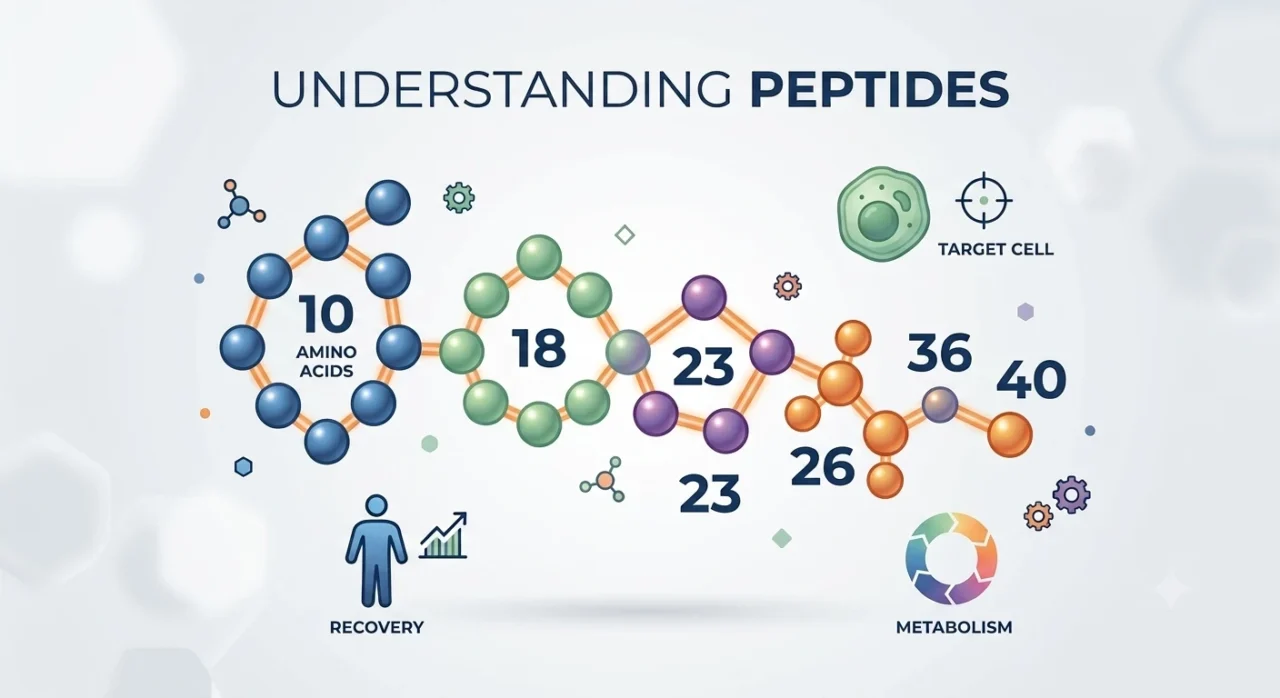
Peptides are short chains of amino acids. The body naturally uses many peptides as signaling molecules. They help regulate processes involving appetite, digestion, hormone release, blood sugar and tissue communication.
However, products described as peptides can fall into very different categories. Those categories should not be treated as interchangeable.
FDA-Approved Medications
These products have completed an FDA review process for specific medical uses. Certain GLP-1 medications are examples of peptide-based drugs with FDA-approved indications.
Compounded Medications
A licensed pharmacy may prepare certain medications for an individual patient when legally and medically appropriate. However, compounded medications are not FDA-approved products.
Research-Only Products
Products labeled “research use only” or “not for human consumption” should not be treated as prescription medication. Their purity, sterility and actual contents may be uncertain.
Why Peptide Therapy Is in the News
Peptides have become one of the most discussed areas of metabolic, hormone and performance medicine. Interest has grown as patients learn more about GLP-1 medications, growth hormone–related peptides and compounds promoted for recovery.
Regulatory discussions have also brought new attention to compounded peptide products. Still, a committee discussion, research finding or regulatory recommendation does not automatically make a compound FDA-approved or appropriate for routine use.
A headline is not a prescription.
Medical suitability depends on the exact product, its legal status, available evidence, the patient’s health history, laboratory findings and the prescribing provider’s clinical judgment.
Patients should be especially cautious when a social media post describes a compound as proven to heal injuries, reverse aging or produce dramatic body changes. Those claims may go far beyond the available human evidence.
Why Peptide Therapy News Can Be Misleading
Medical research develops in stages. A compound may first show an interesting effect in laboratory cells or animals. Researchers must then determine whether the same effect occurs safely in people.
Human studies also need to answer practical questions. What dose may be appropriate? Which side effects occur? Does the compound interact with other medications? Most importantly, does the likely benefit outweigh the possible risk?
The word “natural” does not guarantee safety either. The body naturally produces many powerful signaling substances. Using the wrong substance or dose can still create unwanted effects.
Why Online Peptide Menus Can Fail Patients
Many online sellers begin with a list of products. A patient chooses a goal such as fat loss, faster recovery, better sleep or anti-aging support. The platform then recommends a popular compound.
That process works backward. The provider should identify the medical concern before choosing a treatment.
Fatigue, stubborn weight gain, reduced strength, poor sleep and slow recovery have many possible causes. Low testosterone, thyroid dysfunction, insulin resistance, nutrient deficiencies, medication effects, chronic stress and sleep apnea may create overlapping symptoms.
Without appropriate testing, a patient may spend money treating the wrong issue. In addition, using an injectable product without knowing its source, purity or suitability can create unnecessary risk.
Questions to Ask Before Considering a Peptide
01. Is the medication FDA-approved for the proposed use?
02. If it is compounded, why is compounding needed for me?
03. Has a licensed provider reviewed my health history?
04. Which labs will be checked before treatment?
05. Which licensed pharmacy will prepare the medication?
06. What benefits are supported by human evidence?
07. What side effects should I watch for?
08. How will the provider monitor my response?
What Actually Works: Start With the Medical Goal
Responsible care starts by identifying the patient’s actual concern. Is the person struggling with appetite, metabolic dysfunction, low hormone levels, poor sleep, reduced recovery or another diagnosed condition?
Next, the provider reviews symptoms, medical history, medications and relevant laboratory markers. That information helps determine whether treatment is appropriate and which option makes sense.
Sometimes peptide therapy may fit the clinical picture. In other cases, a different treatment or lifestyle adjustment may better address the underlying problem. A responsible clinic should be willing to say both.
Which Peptides Are Patients Hearing About?
Peptide discussions often combine several different treatment categories. Understanding the intended medical goal helps separate them.
Metabolic Peptides
Certain GLP-1 medications may support blood sugar management, appetite regulation and chronic weight management when medically appropriate.
Growth Hormone Secretagogues
Some peptides stimulate the pituitary gland to release more of the body’s own growth hormone. Eligibility depends on the patient’s clinical picture.
Recovery Peptides
Several compounds are promoted for tissue or exercise recovery. However, the strength of human evidence and regulatory status varies by product.
See MOPE Clinic’s Peptide Program
Read the Peptide Starter Guide
Peptide Therapy News and Medical Weight Loss
Some of the best-known peptide-based medications are GLP-1 receptor agonists. Depending on the medication, they can affect appetite, digestion, blood sugar regulation and feelings of fullness.
Even so, medication alone does not create a complete weight-management plan. Patients need adequate protein, hydration, sleep, resistance activity and ongoing monitoring. Those steps can help protect lean muscle while supporting long-term progress.
That matters in South Louisiana. Heat, humidity, busy schedules and the region’s rich food culture can make consistency harder. Therefore, a successful plan should fit the patient’s actual Louisiana lifestyle rather than a generic online program.
Safe Steps to Take Before Your Appointment
Patients should not attempt to mix, dose or inject research peptides themselves. However, a few simple preparation steps can make a medical consultation more productive.
📝
Track Your Symptoms
Write down changes in energy, sleep, appetite, recovery, weight, strength and mood. Note when each symptom began.
💊
List Your Medications
Include prescriptions, vitamins, supplements, pre-workout products and anything purchased from an online seller.
🧪
Bring Previous Labs
Past laboratory results can help your provider identify changes and decide which additional tests may be useful.
🔍
Check the Source
Avoid products labeled “research only,” “not for human consumption” or products without a verifiable pharmacy source.
The MOPE Clinic Solution
Labs Before Peptides. No Exceptions.
MOPE Clinic does not prescribe medication because a compound appeared on television or started trending online. Treatment begins with a real medical evaluation.
You will never be prescribed medication at MOPE Clinic without labs. Your provider reviews your hormone levels, metabolic markers, symptoms, medical history and goals before recommending a treatment plan.
When peptide therapy is clinically appropriate, the plan is personalized. When another option better fits the patient’s needs, the provider discusses that approach instead. MOPE Clinic does not sell peptides from a one-size-fits-all menu.
MOPE Clinic is a real medical clinic located at 4417 Lorino Street, Suite 103, in Metairie. It is not a virtual-only prescription provider. The clinic serves patients from Metairie, New Orleans, Kenner, Slidell, Covington, Mandeville, Houma and communities throughout South Louisiana.
Continue Exploring MOPE Clinic
Find the Next Answer You Need
Learn more about peptide therapy, medical weight loss, exercise recovery and MOPE Clinic’s labs-first medical approach.
Frequently Asked Questions About Peptide Therapy
Are all peptides FDA-approved?
No. Some peptide-based medications have FDA-approved uses. Other products may be compounded under specific circumstances, while many peptides promoted online have not received FDA approval for human treatment.
Are compounded peptides FDA-approved?
No. Compounded medications do not undergo the same FDA premarket review for safety, effectiveness and quality as FDA-approved drug products. A licensed provider and pharmacy should determine whether compounding is appropriate.
Can I buy peptides online without seeing a doctor?
Websites may sell products labeled for research use. However, that does not make those products safe for self-treatment. The contents, purity, sterility and dose may be uncertain.
Do I need labs before peptide therapy?
Yes. Laboratory testing helps identify possible causes of symptoms, establish a baseline and guide treatment decisions. MOPE Clinic requires lab work before prescribing any medication.
Can peptide therapy help with weight loss?
Certain peptide-based medications, including specific GLP-1 drugs, have approved uses related to diabetes or chronic weight management. Eligibility depends on the medication, the patient’s health history, labs and medical evaluation.
Where can I find medically supervised peptide therapy near New Orleans?
MOPE Clinic is a real medical clinic in Metairie that serves patients from New Orleans, Kenner, Slidell, Covington, Mandeville, Houma and across South Louisiana. Treatment begins with laboratory testing and a medical evaluation.
Trusted Medical Resources
For additional education about compounded medications and peptide-based therapies, review these medical and regulatory resources:
FDA information about compounded medications
National Institute of Diabetes and Digestive and Kidney Diseases
Interested in Peptides? Start With Answers.
Schedule a consultation at MOPE Clinic to review your symptoms, health history, goals and laboratory results with a licensed medical provider.
LegitScript-Certified • Labs Required Before Treatment
Personalized Treatment Plans • Real Metairie Medical Clinic
Medical disclaimer: This content is provided for general educational purposes and does not replace individualized medical advice, diagnosis or treatment. Peptide eligibility depends on medical history, laboratory results, current regulations and provider judgment. Compounded medications are not FDA-approved. Not every patient is a candidate for peptide therapy, and individual results vary.