

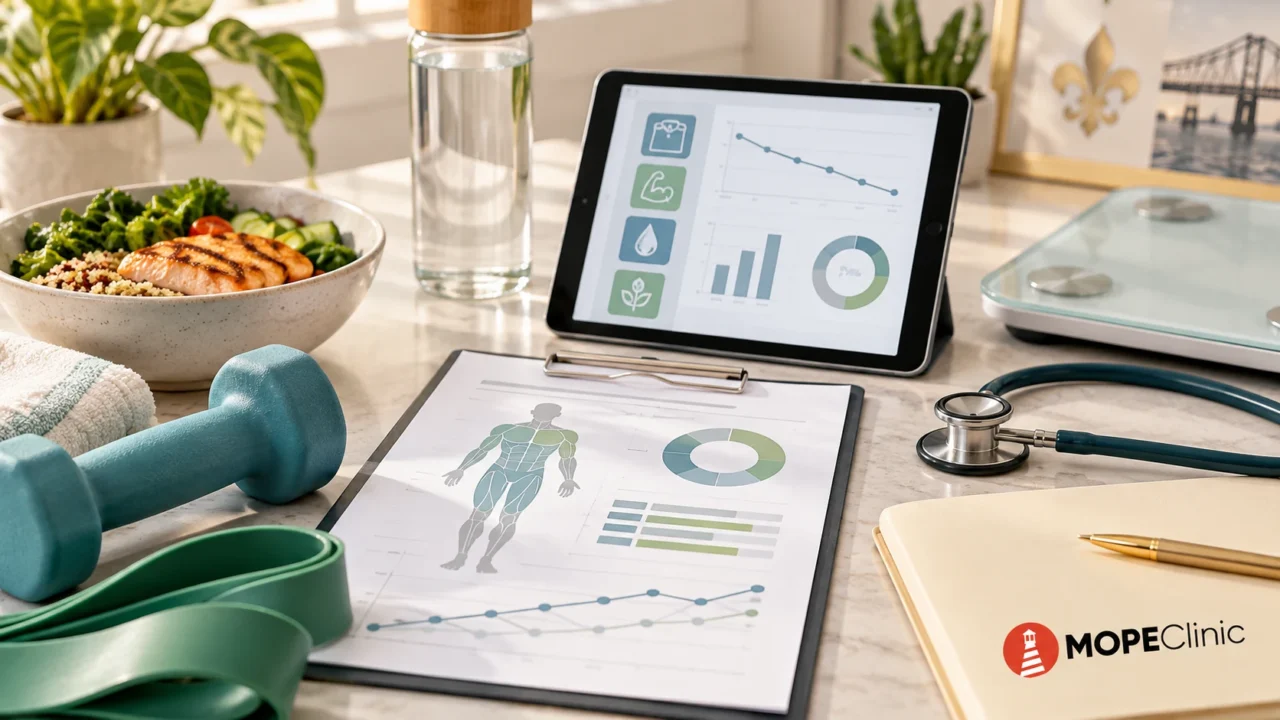
MEDICAL WEIGHT LOSS • METAIRIE, LOUISIANA
GLP-1 Muscle Loss: How to Protect Lean Mass While Losing Weight
GLP-1 muscle loss has become one of the biggest questions surrounding medications such as semaglutide and tirzepatide. The concern is legitimate—but the answer is more complicated than saying a medication simply “burns muscle.”
Significant weight loss can include both fat mass and lean mass. That is why good medical weight-loss care should look beyond the number on the scale and consider nutrition, strength, body composition, symptoms, medical history, and appropriate testing.
✓ LegitScript Certified
✓ Individualized Evaluation
✓ Personalized Treatment Plans
Quick Answer: Do GLP-1 Medications Cause Muscle Loss?
Weight loss with GLP-1 medications can include a reduction in lean body mass. However, lean mass is not exactly the same thing as skeletal muscle, and muscle loss is not unique to GLP-1 therapy. Significant weight loss from dieting or other approaches can also reduce lean mass.
The better question is: how much of the weight you are losing is fat, how much is lean tissue, and what are you doing to help preserve strength and muscle?
What You’ll Learn
Why GLP-1 Muscle Loss Is Getting So Much Attention
The Problem
Semaglutide, tirzepatide, and other medications that affect GLP-1 pathways have changed medical weight management. They can help appropriate patients reduce appetite and lose significant weight.
As more people use these therapies, however, attention has shifted from simply asking, “How many pounds did I lose?” to asking, “What kind of weight did I lose?”
That distinction matters because body weight includes fat, muscle, bone, organs, water, and other tissues.
A 2026 systematic review and meta-analysis found that lean mass accounted for a portion of total weight lost with semaglutide, tirzepatide, and liraglutide. Importantly, lean-mass reduction also occurred with intensive lifestyle weight loss. Programs incorporating resistance training showed a more favorable lean-mass profile.
Important Distinction
Lean mass does not mean pure muscle. Body-composition measurements may include skeletal muscle, body water, organs, and other non-fat tissue. That is one reason dramatic social-media claims about a specific percentage of “muscle loss” can be misleading.
Why Can Lean Mass Decrease When You Lose Weight?
Why It Happens
Your body does not draw energy exclusively from stored body fat during weight loss. When calorie intake drops and body weight falls, some reduction in lean tissue may also occur.
Several factors can influence how much lean mass a person maintains, including age, activity level, nutritional intake, baseline muscle mass, the amount of weight lost, and whether resistance exercise is part of the plan.
Appetite suppression can add another challenge. Someone who feels full after a few bites may unintentionally reduce not only calories but also protein, fluids, and nutrient-dense foods.
A joint advisory from experts representing the American College of Lifestyle Medicine, American Society for Nutrition, Obesity Medicine Association, and The Obesity Society emphasizes nutrition, adequate protein, resistance training, and ongoing assessment as important parts of GLP-1 care.
Read the peer-reviewed GLP-1 nutrition advisory through NIH PubMed Central →
Why “I Lost 30 Pounds” Does Not Tell the Whole Story
Why Scale-Only Thinking Falls Short
A bathroom scale can tell you that your total body weight changed. It cannot tell you whether most of that change came from fat, lean tissue, or changes in body water.
Two people can lose the same number of pounds and experience very different changes in body composition, strength, and overall health.
Scale-Only Thinking
“The number went down, so everything must be going perfectly.”
Whole-Patient Thinking
“What changed in body composition, strength, nutrition, symptoms, and metabolic health?”
That is one reason medically supervised weight management should be about more than prescribing a medication and checking the scale months later.
Looking Beyond the Number on the Scale
MOPE Clinic’s medical weight-loss program includes individualized evaluation and body-composition assessment to help patients understand more than total body weight.
How Can You Help Protect Muscle During GLP-1 Weight Loss?
What Actually Helps
There is no single trick that guarantees muscle preservation. However, several practical strategies are supported by current obesity-care recommendations.
1. Include Resistance Training
Strength training gives your body a reason to maintain muscle during weight loss. Depending on your health and fitness level, resistance exercise may include machines, free weights, resistance bands, or appropriately designed body-weight exercises.
2. Don’t Accidentally Stop Eating Protein
Reduced appetite is part of why GLP-1 medications can help with weight management. However, eating substantially less can also make it harder to consume adequate protein and other essential nutrients.
Protein needs are not identical for everyone. Age, body composition, kidney function, activity level, and medical history can all affect what makes sense for an individual.
Practical tip:
If your appetite becomes small, consider eating the nutrient-dense and protein-containing part of the meal first instead of filling up on foods that provide little protein. Your individual nutrition plan should still be discussed with your clinician or dietitian.
3. Track Strength—Not Just Pounds
Pay attention to whether you are maintaining your ability to perform normal activities.
- Are your normal strength exercises becoming dramatically harder?
- Are routine household tasks becoming more difficult?
- Do you feel unusually weak rather than simply lighter?
- Has your activity level dropped sharply because you are not eating or drinking enough?
4. Pay Attention to Hydration
Hydration matters during any weight-loss program. It becomes especially relevant if reduced appetite, nausea, vomiting, or diarrhea affect fluid intake. Here in South Louisiana, heat and humidity can make hydration planning even more important for people exercising outdoors or spending long periods in the heat.
5. Don’t Chase the Fastest Possible Weight Loss
Faster is not automatically better. A medical plan should consider how you are tolerating treatment and what is happening to your overall health—not simply how rapidly the number on the scale changes.
Medication Safety Reminder
Do not change a prescription dose on your own. If appetite suppression becomes so strong that you struggle to eat, drink, or maintain normal activity, contact your prescribing clinician rather than adjusting medication without medical guidance.
Does Research Mean Everyone on Semaglutide Will Lose Muscle?
No.
Individual outcomes vary, and newer research illustrates why this topic needs nuance.
A prospective study called SEMALEAN followed adults with obesity receiving semaglutide and measured weight, body composition, and muscle function. Participants experienced an initial decline in lean mass, followed by stabilization later in treatment. At the same time, handgrip strength improved.
The study does not mean everyone will have the same result. Instead, it reinforces an important point: body weight, lean mass, and muscle function are related, but they are not interchangeable measurements.
What Should Be Monitored During Medical Weight Loss?
The MOPE Clinic Approach
There is no single laboratory test that tells a clinician whether every pound lost was fat or muscle. However, medical weight management should still consider much more than body weight.
Depending on the individual, evaluation may include medical history, symptoms, medications, appropriate laboratory testing, nutritional intake, activity level, treatment response, and body-composition information.
At MOPE Clinic, treatment decisions are individualized rather than built around one default protocol. Appropriate testing is considered together with symptoms, medical history, and personal goals.
Patients may use their preferred lab location.
Questions Worth Discussing With Your Clinician
- Am I losing weight at an appropriate rate for me?
- Am I consuming enough protein and nutrient-dense food?
- Should I track body composition as well as body weight?
- What type of resistance exercise is appropriate for me?
- Could another medical or hormonal issue contribute to fatigue or weakness?
What If Fatigue or Loss of Strength Isn’t Just From Weight Loss?
Men experiencing persistent fatigue, reduced strength, low sex drive, or other symptoms sometimes associated with testosterone deficiency may need a separate medical evaluation. Symptoms alone cannot diagnose low testosterone.
GLP-1 Weight Loss in Metairie and South Louisiana
Weight-management advice has to work in real life.
In Metairie, New Orleans, and throughout South Louisiana, that can mean planning around restaurant meals, family gatherings, long workdays, high summer temperatures, and humidity that can make outdoor activity more difficult.
You do not need a perfect lifestyle to make progress. However, you do need a strategy that fits your actual life.
MOPE Clinic is a physical medical clinic in Metairie serving Greater New Orleans and patients throughout South Louisiana. Concierge visits are available by appointment, and plans are individualized around each patient’s evaluation, medical history, appropriate testing, and goals.
5 Practical Things You Can Track This Week
1. Write down what you actually eat.
Track three typical days without trying to make the record look perfect. The goal is to see whether appetite suppression has unintentionally reduced protein and overall nutrition.
2. Record your normal strength routine.
Note the resistance or repetitions you can comfortably perform so you have a simple baseline for comparison.
3. Watch your hydration.
This is especially useful during hot Louisiana weather or when gastrointestinal symptoms are affecting fluid intake.
4. Track how you feel, not just what you weigh.
Energy, strength, nausea, appetite, and exercise tolerance may all be useful information to discuss at follow-up.
5. Bring questions to your clinician.
If something feels wrong, do not ignore it simply because the number on the scale is moving in the direction you expected.
Frequently Asked Questions About GLP-1 Muscle Loss
Does semaglutide cause muscle loss?
Weight loss with semaglutide can include a reduction in lean mass. However, lean mass is broader than skeletal muscle, and lean-mass reduction can also happen during substantial weight loss without GLP-1 medications.
Does tirzepatide make you lose muscle?
Tirzepatide-associated weight loss can include both fat and lean mass. That does not mean every person will lose the same amount of muscle. Nutrition, strength training, activity, age, and starting body composition can all matter.
How do I protect muscle while taking a GLP-1?
Current expert guidance emphasizes resistance training, appropriate nutrition and protein intake, physical activity, and medical follow-up. The best approach depends on the individual.
How much protein should I eat on semaglutide or tirzepatide?
There is no single protein target that is right for everyone. Needs may vary based on body composition, age, activity, kidney function, and other medical factors.
Should I lift weights while using a GLP-1?
Resistance exercise can help preserve lean tissue during weight loss. However, anyone with medical conditions, injuries, or little exercise experience should discuss an appropriate starting plan with a healthcare professional.
Can low testosterone make it harder to maintain muscle?
Testosterone plays a role in muscle and body composition in men. However, fatigue, weakness, and muscle changes have many possible causes. Appropriate evaluation and laboratory testing are needed before deciding whether hormone treatment is appropriate.
Medical Sources & Further Reading
2026 systematic review:
Lean Mass Changes With Incretin Therapy Versus Lifestyle Intervention
GLP-1 nutrition and lifestyle advisory:
Nutritional Priorities to Support GLP-1 Therapy for Obesity
Semaglutide body-composition study:
Impact of Semaglutide on Fat Mass, Lean Mass and Muscle Function
Medical Weight Loss Should Be About More Than the Scale
If you are considering medical weight-loss care—or you are already losing weight and want a more individualized plan—MOPE Clinic can help you understand the bigger picture.
MOPE Clinic is a physical medical clinic in Metairie serving Greater New Orleans and patients throughout South Louisiana. Care is personalized around your medical history, symptoms, appropriate evaluation, and individual goals.
Concierge visits by appointment only.
LegitScript-Certified • Physical Metairie Clinic • Individualized Evaluation • Personalized Treatment Plans