Can Losing Weight Raise Testosterone Naturally? What Men Over 40 Should Know
The Quick Answer
Does Losing Weight Increase Testosterone?
Yes, it can. Weight loss may improve testosterone levels in men whose low testosterone is associated with excess weight. However, improvements vary, and weight loss is not a guaranteed cure. Men with persistent symptoms or another underlying medical cause may need further evaluation and a different treatment approach.
Understanding the Connection
Why Excess Body Fat Can Affect Testosterone
Testosterone plays a role in sexual function, muscle and bone maintenance, and other important processes in men’s health. The brain and testes work together to regulate testosterone production.
Excess body fat, particularly in men with obesity, can contribute to hormonal changes. Altered hormone signaling, insulin resistance, and inflammation may all be involved.
As a result, some men develop lower testosterone levels that may improve with sustained weight loss. Others have a separate condition affecting hormone production that requires a different medical approach.
01 / BODY FAT
More Than a Scale Number
Body-fat distribution and metabolic health can provide useful context beyond total body weight.
02 / HORMONES
A Two-Way Relationship
Excess weight can contribute to hormone changes, while some hormone conditions can affect body composition.
03 / EVALUATION
The Cause Matters
Symptoms and properly interpreted lab results help determine whether further testing or treatment is appropriate.
What Current Medical Guidance Says
In July 2026, the Endocrine Society stated that weight loss is typically first-line therapy for appropriately diagnosed hypogonadism associated with excess weight when no other cause is identified. Hypogonadism is a medical condition involving inadequate testosterone production or action.
Progress Without Guesswork
How Much Weight Do You Need to Lose to Improve Testosterone?
There is no universal number of pounds that guarantees improvement. In men with obesity, greater sustained weight loss is often associated with greater increases in testosterone. However, individual responses differ considerably.
Therefore, a better starting point is to consider overall progress rather than chasing a particular weight or testosterone number.
Look Beyond the Bathroom Scale
- Waist measurement: May help track changes in abdominal fat.
- Strength and muscle: Consider whether physical function is improving.
- Sleep and energy: Note persistent concerns rather than assuming every change is hormonal.
- Metabolic markers: Blood pressure, glucose, and other laboratory results can provide important context.
- Hormone testing: Discuss whether testing or retesting is clinically appropriate.
Want to understand more about related health markers? MOPE also explains five warning signs of metabolic syndrome and how clinical measurements help put weight concerns into perspective.
Habits That Support Health
5 Natural Ways to Support Healthy Testosterone Levels
Healthy habits can support weight management and overall well-being. However, no diet or exercise routine is guaranteed to correct a clinically diagnosed testosterone deficiency.
1. Build a Sustainable Eating Routine
Choose balanced meals that include protein, vegetables, fruit, and fiber-rich foods. Rather than relying on extreme diets, focus on changes you can maintain. Sustainable weight loss may improve hormone levels when excess weight contributes to the problem.
2. Protect Your Muscle Mass
Strength training can help maintain muscle during weight loss. Resistance bands, bodyweight movements, or manageable weights may be useful starting points depending on your health and ability. Building strength matters even when testosterone levels remain unchanged.
3. Pay Attention to Sleep
Sleep affects energy, appetite, recovery, and hormone regulation. Aim for a consistent schedule and sufficient rest. Loud snoring, nighttime gasping, or substantial daytime sleepiness may warrant evaluation for sleep apnea.
4. Add More Everyday Movement
Walking after meals, gardening, or increasing activity during the workday can support weight management. Federal physical activity guidance recommends working toward 150 minutes of moderate-intensity activity each week and muscle-strengthening exercise on at least two days.
5. Review Other Possible Contributors
Certain medications, sleep problems, and underlying conditions can affect testosterone levels or create similar symptoms. A clinician can review these possibilities. Avoid starting over-the-counter testosterone boosters or stopping prescribed medications without medical guidance.
For additional evidence-based advice, review the NIH/NIDDK recommendations for eating and physical activity.
More Than Just Weight Loss
Want a Better Understanding of Your Metabolic Health?
MOPE Clinic’s individualized weight-management services consider medical history, body composition, clinical findings, and appropriate treatment options. Learn about the process before deciding whether a consultation is right for you.
Practical Steps
Your 30-Day Healthy Habits Checklist
Thirty days cannot establish whether your testosterone has returned to a healthy level. Still, a month of consistent habits can help you understand your routine and prepare for a useful clinical discussion.
WEEK 01
Know Your Starting Point
Record your usual sleep, activity, waist measurement, and persistent health concerns.
WEEK 02
Simplify Your Meals
Build regular meals around nutritious foods, adequate protein, and manageable portions.
WEEK 03
Move More Consistently
Gradually increase comfortable activity and introduce appropriate strength training.
WEEK 04
Review Your Progress
Identify changes in habits, measurements, and symptoms, then discuss concerns with a clinician.
Reminder: This is a general wellness framework, not a medical treatment plan. Adjust activities and nutrition with professional guidance when needed.
When Lifestyle Changes Aren’t Enough
What If You Lose Weight but Still Feel Like Something Is Wrong?
Weight loss can improve health without resolving every symptom. Persistent low libido, fatigue, or other concerns may have hormonal or nonhormonal causes.
In fact, testosterone deficiency cannot be diagnosed from symptoms alone. Clinical guidance calls for compatible symptoms or signs together with consistently low testosterone measured on appropriate testing. Two separate morning testosterone measurements are generally recommended as part of the evaluation.
Depending on your history and results, a clinician may consider additional testing for other contributing conditions.
Questions to Bring to a Consultation
- Could excess weight be affecting my testosterone?
- Are my symptoms consistent with testosterone deficiency?
- Should I have morning testosterone testing?
- Could sleep apnea or medication use play a role?
- What lifestyle changes should I focus on first?
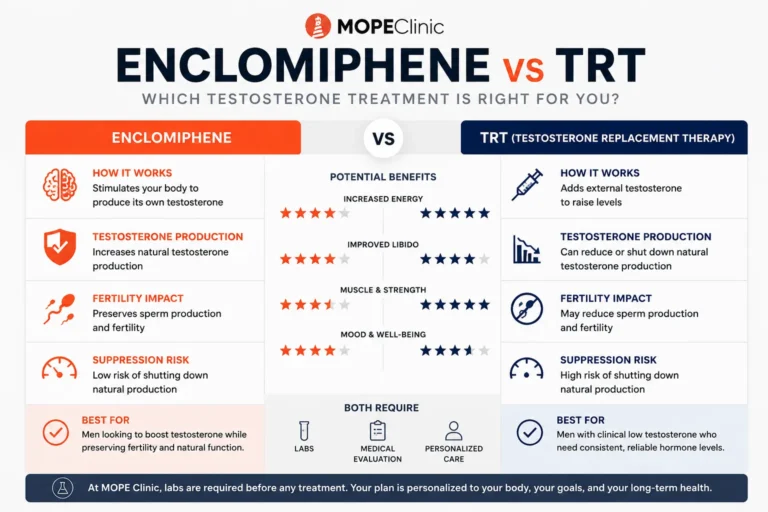
- What would the benefits, risks, and monitoring of TRT involve?
- Could TRT affect my fertility plans?
Weight Loss or Testosterone Therapy: Which Comes First?
There is no single answer for every man. The cause of the low testosterone is what matters most.
PATH A
Weight Management First
When low testosterone is associated with excess weight and no other cause is identified, weight loss is typically the preferred initial approach. Follow-up helps determine whether hormone levels and symptoms improve.
PATH B
Further Evaluation or TRT
Men with confirmed testosterone deficiency due to a disorder affecting the testes, pituitary, or hypothalamus may need a different treatment approach. TRT decisions require discussion of benefits, risks, fertility, and monitoring.
Important: Testosterone therapy should not be used simply as a shortcut to weight loss. It can also suppress sperm production, which matters for men who may want children.
MOPE Clinic’s TRT service page explains the individualized clinical evaluation and care process for men exploring treatment.
Local, Individualized Care
Men’s Hormone and Weight-Loss Care in Metairie, Louisiana
For men across Metairie, New Orleans, Kenner, and the surrounding South Louisiana communities, changes in weight, energy, and hormonal health may overlap. A clinical evaluation can help identify possible contributing factors.
At MOPE Clinic, Chris Rue, FNP-C, takes an individualized approach to hormone health and medical weight management. The new-patient process includes reviewing medical history, completing a physical examination, SECA body-composition assessment, and comprehensive lab testing.
Patients can discuss clinic-based testing or the option of using an outside laboratory. Chris prefers an in-person first visit. Virtual visits are also available when appropriate, depending on clinical suitability, location, and applicable requirements.
MOPE Clinic is a physical, cash-pay concierge practice in Metairie. Visits are by appointment only.
Continue Learning
Keep Exploring MOPE Clinic
There is more to men’s health than a single hormone number. These related articles explain some of the other factors worth understanding.
BODY COMPOSITION
GLP-1 Muscle Loss: Protecting Lean Mass
Why the scale does not tell the whole story—and how to think about preserving muscle during weight loss.
METABOLIC HEALTH
Metabolic Syndrome: Five Warning Signs
Explore how waist size, blood pressure, glucose, and other health markers may fit together.
MORE MEN’S HEALTH
Explore the Hormone Optimization Blog
Find more educational articles about testosterone, body composition, and men’s health from MOPE Clinic.
Common Questions
Frequently Asked Questions
Can losing belly fat raise testosterone?
It may. In men whose low testosterone is related to excess weight, sustained weight loss can improve hormone levels. However, losing belly fat does not guarantee that testosterone will return to the normal range.
Can losing weight raise testosterone after age 40?
Yes, some men over 40 may see improvement. However, age alone does not determine the response. Underlying medical conditions, medications, sleep, and overall health may influence the outcome.
Does exercise increase testosterone naturally?
Exercise supports body composition, strength, and metabolic health. Still, exercise alone does not reliably correct every case of clinically diagnosed testosterone deficiency.
Should I lose weight before considering TRT?
When excess weight is the apparent cause of low testosterone and no other cause is identified, weight loss is typically considered first. Other causes of testosterone deficiency may require a different approach.
How do I know if my testosterone is low?
Symptoms are not enough for a diagnosis. A clinician evaluates the symptoms, medical history, and appropriately repeated morning testosterone measurements. Additional testing may be needed.
Can weight-loss medications fix low testosterone?
Weight reduction may improve testosterone in some men, regardless of the medically appropriate method used to achieve it. However, weight-loss medications are not automatically treatments for testosterone deficiency.
MOPE Clinic | Metairie, Louisiana
Your Health Is More Than a Number on a Scale
If you have questions about weight changes, low testosterone symptoms, or your next steps, MOPE Clinic can discuss the evaluation process with you. Care decisions are individualized and based on clinical findings.
Chris Rue, FNP-C | Physical Metairie Clinic | Concierge Visits by Appointment
Medical References
- Endocrine Society: Statement on Testosterone Replacement Therapy, July 2026
- National Institute of Diabetes and Digestive and Kidney Diseases: Eating and Physical Activity to Lose or Maintain Weight
Medical disclaimer: This content provides general educational information. It does not diagnose testosterone deficiency, recommend individualized treatment, or replace medical advice. Symptoms, clinical evaluation, and treatment decisions should be discussed with a qualified healthcare professional.
This article is general education, not a diagnosis or medical advice. Treatment is individualized and starts with an evaluation and labs.