

🌿 Medical Weight Loss • Metairie, Louisiana
GLP-1 Hair Loss: Why Hair Shedding Happens During Weight Loss
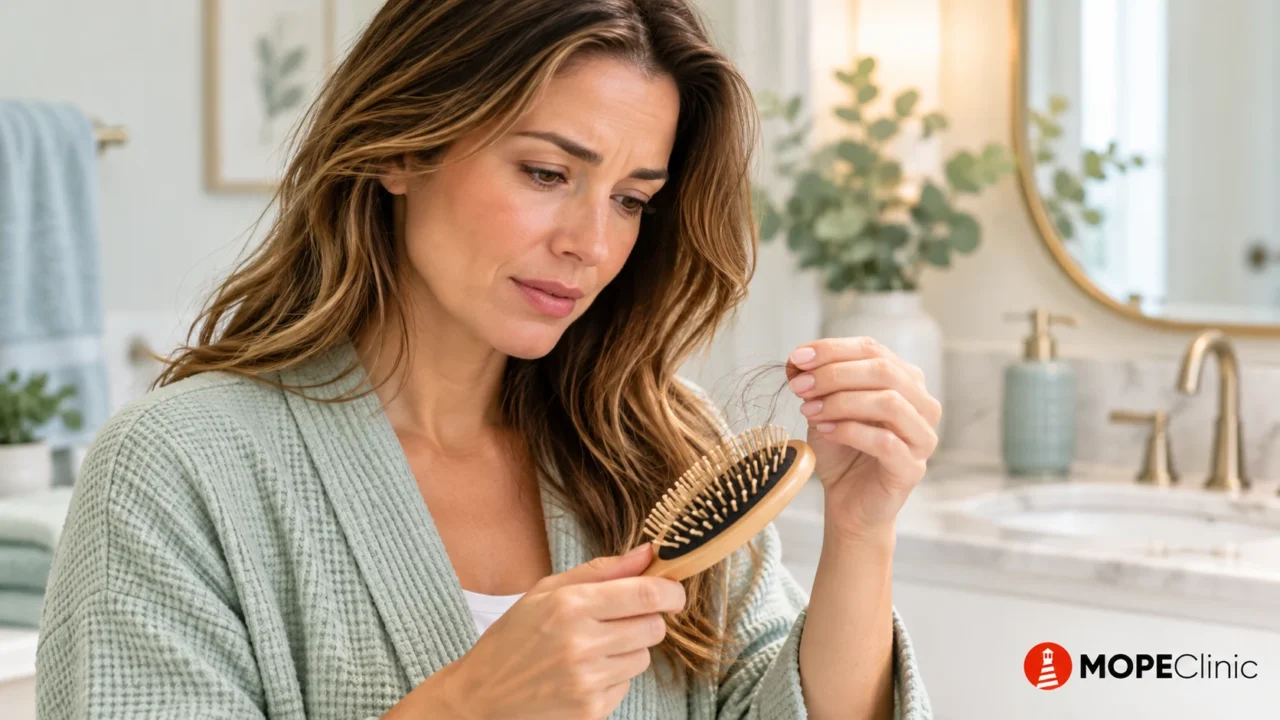
You’re losing weight, feeling encouraged by your progress, and then something unexpected happens: more hair starts showing up in your brush or shower drain.
GLP-1 hair loss is a concern some people experience while taking weight-management medications such as semaglutide or tirzepatide. However, the relationship between the medication, weight loss, and hair shedding isn’t always straightforward.
The good news is that some forms of shedding are temporary. Still, understanding the possible causes matters more than guessing or reaching for a quick fix.
⚡ Quick Answer: Can GLP-1 Medications Cause Hair Loss?
Yes, hair shedding has been reported during treatment with some GLP-1-based weight-loss medications. Rapid or significant weight loss may trigger a temporary shedding condition called telogen effluvium. Reduced food intake and nutritional deficiencies may also play a role.
However, researchers have not fully determined how much hair loss is related to weight reduction versus possible medication effects. Not everyone experiences shedding, and persistent or unusual hair loss deserves medical evaluation.
🌱 Why Can Hair Start Shedding During Weight Loss?
Your hair grows in cycles. Most hairs are actively growing, while others enter a resting phase before naturally shedding.
When your body experiences a major physical change, more hairs than usual may shift into the resting phase. Several weeks or months later, those hairs can shed at roughly the same time.
🔍 What Is Telogen Effluvium?
Telogen effluvium is a form of excessive hair shedding that can follow a major physical or emotional stressor. Significant weight loss, illness, surgery, and other changes may trigger it.
Shedding often becomes noticeable two to three months after the triggering change, although timing varies. In many cases, fullness gradually improves once the underlying trigger resolves.
💡 Important distinction: Temporary shedding and permanent-pattern hair loss are different conditions. A person can also experience more than one type of hair loss at the same time.
The American Academy of Dermatology explains the difference between excessive shedding and hair loss.
💊 Semaglutide vs. Tirzepatide: What Does the Research Say?
Semaglutide and tirzepatide are not identical medications. However, both can reduce appetite and support significant weight loss in appropriate patients.
Hair loss has been reported in clinical trials of certain products containing these medications. Understanding the numbers helps put the concern into perspective.
Semaglutide: Wegovy
In adult weight-reduction trials included in the U.S. labeling for Wegovy 2.4 mg injection, hair loss was reported in approximately 3% of treated patients versus 1% receiving placebo.
Tirzepatide: Zepbound
In two pooled weight-reduction trials, U.S. labeling reports hair loss in approximately 4%–5% of Zepbound-treated patients versus 1% receiving placebo, depending on the dose group.
The labeling also describes an association between hair-loss reports and weight reduction.
What these numbers do not mean: The trials do not prove that every reported case was caused directly by the medication. They also cannot predict an individual patient’s risk. These percentages come from specific products, doses, and study populations, not every GLP-1 treatment.
🧬 Three Possible Reasons for GLP-1 Hair Shedding
1. Significant or Rapid Weight Loss
Losing a substantial amount of weight can place temporary stress on the body. This may disrupt the normal hair-growth cycle, even when weight loss occurs without medication.
2. Reduced Nutritional Intake
When appetite decreases, some people struggle to eat balanced meals. Inadequate protein or certain nutrient deficiencies, including iron deficiency, can contribute to hair problems. However, taking supplements without knowing whether a deficiency exists may not help.
3. Other Medical or Hair Conditions
Thyroid disorders, inherited hair loss, autoimmune conditions, medications, hormonal changes, and scalp problems can also cause shedding or thinning. Researchers are still studying whether GLP-1 medications have direct effects on hair follicles.
The American Academy of Dermatology discusses these possible explanations and emphasizes appropriate evaluation.
🥗 Six Practical Ways to Support Your Hair During Weight Loss
No food, supplement, or routine can guarantee that hair shedding will stop. However, the following habits may support general nutrition and make it easier to recognize problems early.
🍳 1. Make Room for Protein
When you feel full quickly, prioritize balanced meals that include protein. Examples include eggs, Greek yogurt, fish, beans, poultry, tofu, and other foods suitable for your needs. Ask your clinician or dietitian about an appropriate protein target, especially if you have kidney disease or other dietary restrictions.
🥬 2. Don’t Forget Nutrient Variety
Include vegetables, fruit, whole grains, and a variety of protein sources as tolerated. If you’re skipping meals regularly or eating a very narrow selection of foods, discuss this with your care team.
⚖️ 3. Review Your Weight-Loss Pace
Faster weight loss isn’t automatically better. Your clinician can help determine whether your current pace, food intake, and treatment plan remain appropriate.
💧 4. Keep Fluids on Your Radar
Reduced appetite, nausea, or vomiting can make hydration more difficult. This is particularly relevant during hot, humid South Louisiana weather. Hydration supports overall health, although drinking extra water alone is not a proven treatment for hair shedding.
🪮 5. Be Gentle With Your Hair
Limit tight hairstyles, excessive heat, and harsh chemical treatments if your hair feels fragile. Gentle hair care may reduce additional breakage, although it cannot correct every underlying cause of shedding.
📝 6. Keep a Simple Timeline
Note when treatment began, major weight changes, when shedding started, and any symptoms such as fatigue or poor food tolerance. A timeline may help your clinician identify a possible trigger.
📅 Will Your Hair Grow Back?
If shedding is caused by telogen effluvium, hair growth often improves after the underlying trigger resolves. However, regrowth takes time because hair grows in cycles.
A General Hair-Shedding Timeline
After a trigger: Excess shedding may become noticeable several months later.
During recovery: Shedding may gradually decrease over the following months when the trigger has resolved.
Regaining fullness: Many people recover much of their usual fullness within six to nine months, but timelines vary and ongoing triggers can prolong shedding.
Not all hair loss is telogen effluvium. A dermatologist can evaluate whether another condition is involved. A diagnosis is particularly important if thinning is persistent, worsening, or occurring in distinct patches.
⚠️ When Hair Loss Deserves Medical Attention
Don’t automatically assume that every change in your hair comes from GLP-1 treatment or weight loss.
Contact a healthcare professional if you notice:
- Sudden patchy hair loss or rapidly progressing thinning.
- Scalp pain, significant redness, scaling, or inflammation.
- Persistent shedding that does not seem to improve.
- Severe fatigue, dizziness, or other unexplained symptoms.
- Difficulty eating or drinking enough during treatment.
Medication safety: Do not stop, increase, or reduce a prescribed GLP-1 medication on your own because of hair shedding. Contact your prescribing clinician to discuss the symptom and whether your treatment plan needs reassessment.
🩺 What Might Your Clinician Check?
A useful evaluation starts with your medical history, medication timeline, weight changes, diet, hair-shedding pattern, and scalp symptoms.
Depending on the findings, a clinician may consider testing for issues such as thyroid dysfunction, anemia, or nutritional deficiencies. Testing should be guided by your symptoms and medical history rather than ordered as the same panel for everyone.
Some patients may benefit from a dermatology evaluation to help distinguish temporary shedding from inherited hair loss, inflammatory scalp conditions, or other causes.
Questions to Bring to Your Appointment
- Could my recent weight change be contributing to shedding?
- Am I getting adequate nutrition while taking my medication?
- Could another condition explain my symptoms?
- Would laboratory testing or a dermatologist referral help?
- Is my current weight-management plan still appropriate?
❓ Frequently Asked Questions About GLP-1 Hair Loss
Does semaglutide cause hair loss?
Hair loss was reported in clinical trials of Wegovy. Significant weight loss and nutritional changes may contribute, but researchers have not fully established every possible mechanism. Not everyone who uses semaglutide experiences hair shedding.
Can tirzepatide cause hair shedding?
Yes, hair loss has been reported among patients receiving Zepbound in clinical trials. Its prescribing information associates reported hair loss with weight reduction. Individual causes still require evaluation.
How long does GLP-1-related hair shedding last?
If the cause is telogen effluvium, shedding often improves over several months after the trigger resolves. However, persistent shedding or another type of hair loss can follow a different course.
Will eating more protein stop my hair from falling out?
Adequate protein supports normal body function, including hair growth. However, eating more protein will not necessarily stop shedding caused by another medical condition. A balanced nutritional assessment may be more useful than focusing on one nutrient alone.
Should I take biotin or hair-growth supplements?
Not automatically. Supplements are not a guaranteed solution, and some can interfere with laboratory testing or cause adverse effects. Discuss possible deficiencies and supplement use with your healthcare professional before starting new products.
Should I stop my GLP-1 medication if my hair is thinning?
Don’t make that decision without speaking to your prescriber. Hair shedding may have several causes. Your clinician can review the timing, severity, nutritional intake, other symptoms, and whether changes to your medical plan are appropriate.
📍 Medical Weight-Loss Guidance in Metairie & Greater New Orleans
Managing weight while protecting your overall health is about more than watching the scale. Nutrition, treatment tolerance, changing symptoms, and the pace of weight loss all deserve attention.
At MOPE Clinic in Metairie, Louisiana, Chris Rue, FNP-C, provides individualized medical weight-management care. The clinic serves patients from Greater New Orleans and throughout South Louisiana.
Care decisions depend on medical history, clinical evaluation, appropriate testing, individual goals, and response to treatment. Concierge visits are by appointment only. Virtual visits may be available when clinically appropriate and permitted for the individual patient.
🌈 Keep Exploring MOPE Clinic
Hair shedding is only one part of the bigger weight-management picture. These related resources explain how medical weight-loss care works and why nutrition, strength, and whole-body health matter.
⚖️ Medical Weight-Loss Services
Understand MOPE Clinic’s evaluation-based approach to weight-management care in Metairie.
💪 GLP-1 Muscle Loss
Learn why preserving strength and adequate nutrition matters during medical weight loss.
📚 More Hormone & Metabolic Health Articles
Explore additional educational resources from MOPE Clinic on hormones, metabolism, and individualized care.
📖 Medical Sources & Further Reading
American Academy of Dermatology: How GLP-1 drugs can affect skin, hair, and nails.
American Academy of Dermatology: Hair loss versus hair shedding.
National Library of Medicine / DailyMed: Wegovy prescribing information.
National Library of Medicine / DailyMed: Zepbound prescribing information.
🌿 🩺 💚
Your Weight-Loss Plan Should Support Your Whole Health
If you’re concerned about hair shedding during weight loss or you’re exploring medically supervised weight-management care, a conversation with a healthcare professional can help you understand your options.
MOPE Clinic • Metairie, Louisiana
Chris Rue, FNP-C
Serving Greater New Orleans and South Louisiana
Concierge visits by appointment only.
📞 Call 504-265-5491
💬 Contact MOPE Clinic
Educational information only. This article does not replace personalized medical advice, diagnosis, or treatment.