

Health Optimization in Metairie Should Start With Labs
Health optimization is one of the biggest wellness conversations right now. People are tracking sleep, steps, heart rate, calories, glucose, stress, recovery, body composition, and even “biological age.” These tools can be helpful, but they cannot explain everything happening inside the body.
A sleep score cannot diagnose a thyroid issue. A step count cannot explain insulin resistance. A calorie tracker cannot show inflammation. A smartwatch cannot replace lab work. That is why health optimization should start with medical evaluation, not guesswork.
At MOPE Clinic in Metairie, Louisiana, labs are required before treatment. Your provider uses real data, symptoms, health history, and personalized planning to help you understand what may be affecting your energy, weight, metabolism, mood, sleep, and long-term health. If weight changes are part of your concern, you can also read more about weight loss and hormones in Louisiana to understand why metabolism is more complex than calories alone.
The Problem With Wellness Trends
Wellness trends move fast. One month, everyone is talking about fasting. The next month, it is GLP-1 medications, cold plunges, red light therapy, cortisol, gut health, inflammation, protein goals, sleep tracking, or longevity routines.
Some of these trends may have value. However, they can also confuse people. Many patients come in feeling overwhelmed because they have already tried diets, apps, supplements, workouts, and social media advice. Still, they feel tired, stuck, inflamed, foggy, or frustrated with their weight.
That does not mean they failed. It may mean they need a clearer medical picture. Health optimization is not about chasing every trend. It is about understanding what your body actually needs.
Why It Happens
The body is connected. Sleep affects hormones, stress affects appetite, blood sugar affects energy, and inflammation affects recovery. Weight gain can affect metabolic health, while poor nutrition can affect mood, fatigue, and cravings.
Because everything overlaps, one symptom can have more than one cause. A person who feels tired all the time may assume they need more caffeine or a new supplement. However, fatigue can be connected to poor sleep, thyroid imbalance, low vitamin levels, blood sugar issues, stress, inflammation, medications, or hormone changes. Mayo Clinic explains that fatigue can have many possible causes, including lifestyle factors, medications, and medical conditions such as thyroid disease, anemia, diabetes, sleep disorders, and more.
Another person may blame weight gain on willpower. Yet metabolism, sleep quality, insulin resistance, stress, and hormones may all be involved. That is why labs matter. Without labs, health optimization becomes a guessing game.
Why Normal Methods Fail
Most wellness advice is too generic. “Eat clean,” “move more,” “sleep better,” “take this supplement,” and “cut carbs” may help some people, but they do not work the same for everyone.
A patient with insulin resistance may need a different plan than someone with poor sleep and high stress. A patient with thyroid concerns may need a different approach than someone with low protein intake and low muscle mass. Also, a patient taking weight-loss medication may still need nutrition guidance, lab monitoring, and a plan to protect muscle and support long-term success.
That is why copy-and-paste wellness plans often fail. They treat everyone the same. MOPE Clinic does not.
What Actually Works
Health optimization works best when it is personalized. That means your provider looks at your symptoms, medical history, lifestyle, goals, and labs before recommending a plan.
A good plan may include support for medical weight loss, nutrition, sleep, hormone balance, metabolic health, recovery, inflammation, or long-term wellness. However, the exact plan depends on the person. Some patients may also ask about peptide therapy as part of a broader wellness discussion, and MOPE explains that topic further in this guide to peptide therapy near me in Southeast Louisiana.
For some patients, the priority may be weight loss. For others, it may be fatigue, sleep, cravings, brain fog, strength, recovery, or metabolic health. The goal is not to follow the loudest trend. The goal is to find the right starting point.
That starts with labs.
The MOPE Clinic Solution
MOPE Clinic is a real medical clinic in Metairie, Louisiana. We are not a virtual-only provider, and we do not build plans from online quizzes alone.
Labs are required before treatment. That means your provider can review your actual numbers before making recommendations. This helps avoid unnecessary treatment, missed issues, and cookie-cutter care.
MOPE Clinic creates personalized treatment plans for patients in Metairie, New Orleans, Slidell, Covington, Mandeville, Houma, and across South Louisiana. We help patients who are tired of guessing and want a smarter way to approach their health.
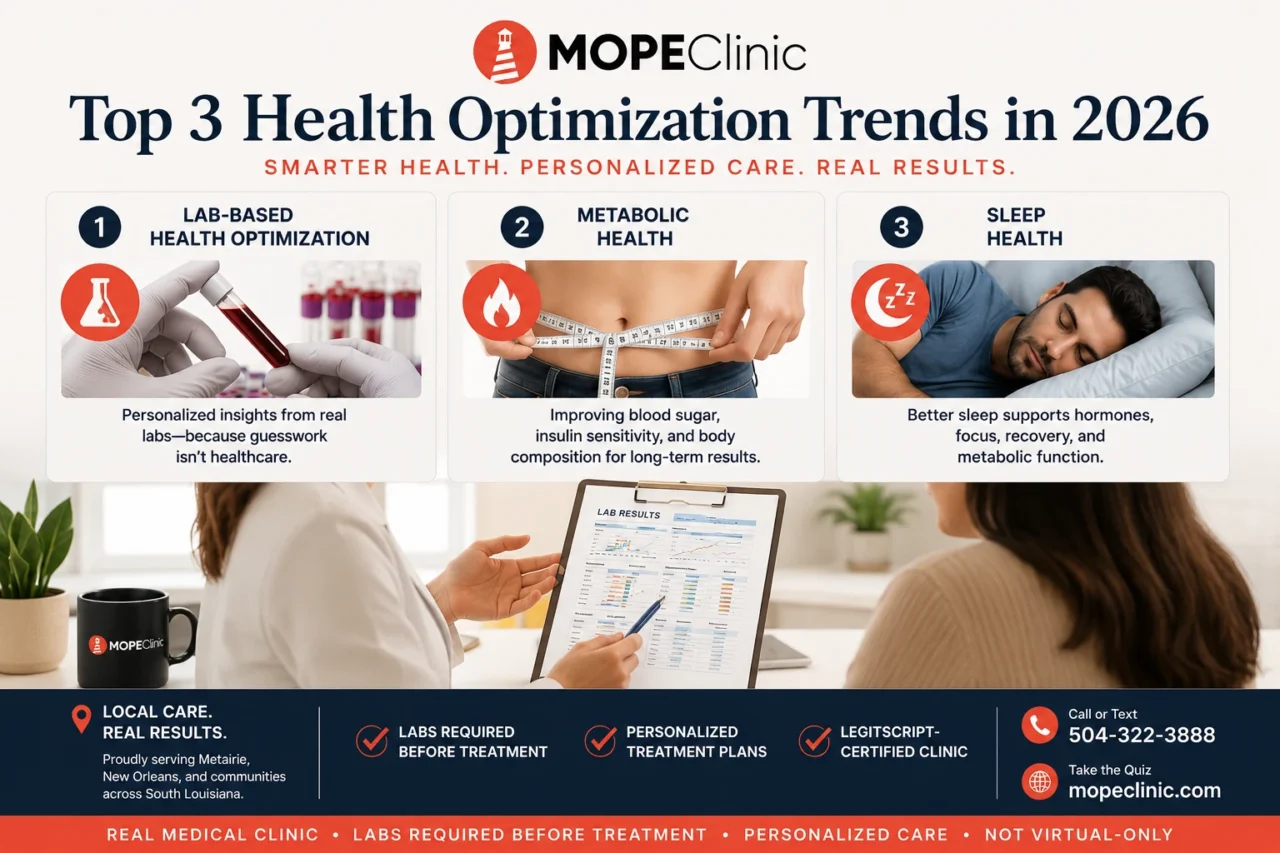
Trend 1: Lab-Based Health Optimization
One of the biggest health trends today is personalization. People no longer want generic advice that could apply to anyone. They want to know what is happening in their own body and what steps actually make sense for them.
That is where lab-based health optimization matters. Labs can help identify patterns that symptoms alone may not explain. Fatigue, weight gain, brain fog, cravings, poor sleep, low motivation, and slow recovery can all overlap with multiple health concerns.
At MOPE Clinic, labs are not an extra step. They are the starting point. Before treatment is recommended, your provider reviews your results, symptoms, goals, and medical history. This helps create a plan based on evidence instead of assumptions.
Trend 2: Metabolic Health
Metabolic health is one of the most important health optimization topics right now. Your metabolism affects how your body uses energy, stores fat, regulates blood sugar, manages hunger, and responds to weight-loss efforts.
When metabolic health is off, patients may notice belly fat, energy crashes, sugar cravings, brain fog, poor sleep, and slow progress with diet and exercise. Many people blame themselves when their weight does not change, but the issue may be more complex than willpower.
Insulin resistance, inflammation, stress, poor sleep, hormone changes, and low muscle mass can all affect metabolic health. The NIH/NCBI overview of metabolic syndrome explains that metabolic health concerns can involve central obesity, insulin resistance, blood pressure, and cholesterol patterns. This is why a personalized plan matters. A patient who is struggling with blood sugar regulation may need a different strategy than someone whose main issue is sleep, stress, or nutrition consistency.
Trend 3: Sleep Health
Sleep health is another major trend, and for good reason. Poor sleep can affect hunger, cravings, blood sugar, stress hormones, recovery, mood, weight, and energy. Even people who spend enough hours in bed may still wake up tired if their sleep quality is poor.
In South Louisiana, sleep can be affected by heat, humidity, allergies, alcohol, late meals, long workdays, stress, and inconsistent routines. Many people assume they are just busy or getting older, but poor sleep can quietly affect the entire body.
Wearable devices may show sleep scores, heart rate, or recovery trends. However, they cannot explain why sleep is poor. Cleveland Clinic notes that sleep deprivation can affect the body and brain in many ways, including mood, thinking, immune function, and physical health. If someone wakes up tired, snores, crashes in the afternoon, or depends on caffeine to function, it may be time to look deeper.
Trend 4: Inflammation
Inflammation is one of the most talked-about health trends right now. However, it is also one of the most misunderstood. Not all inflammation is bad. The body uses inflammation to heal. The concern is ongoing inflammation that may affect energy, recovery, weight, and long-term wellness.
Chronic inflammation can be influenced by sleep, nutrition, stress, alcohol, body weight, blood sugar, medical conditions, and activity level. It can also make people feel puffy, tired, sore, or run down.
Instead of guessing based on symptoms alone, labs and medical evaluation can help your provider understand what may need attention. That is the difference between trend-based wellness and medical health optimization.
Trend 5: GLP-1 Weight Loss and Medical Weight Management
GLP-1 medications have changed the weight-loss conversation. Many people are now more aware that weight loss is not always as simple as eating less and moving more. Appetite, blood sugar, cravings, hormones, metabolism, sleep, and stress can all affect progress.
However, weight-loss medication should still be part of a medical plan, not a stand-alone trend. Patients may need lab monitoring, nutrition guidance, muscle preservation support, hydration strategies, and long-term planning.
The goal is not just to lose weight quickly. The goal is to improve health in a way that can be maintained. At MOPE Clinic, medical weight loss is personalized because each patient’s body, labs, symptoms, and lifestyle are different. For more on this connection, visit MOPE Clinic’s article on weight loss and hormones in Louisiana.
Trend 6: Wearable Health Trackers
Wearable health trackers are popular because they give people more visibility into their daily habits. They can show steps, sleep patterns, heart rate, estimated calories, activity levels, and recovery trends. For many people, that information can be motivating.
However, wearable data has limits. A watch can show that your sleep score dropped, but it cannot diagnose sleep apnea, thyroid imbalance, insulin resistance, vitamin deficiency, or hormone changes. It can show that your heart rate changed, but it cannot interpret your labs or medical history.
That does not mean wearables are useless. They can be helpful tools. However, they should support medical care, not replace it. The smartest approach is to combine daily tracking with lab-based evaluation.
Trend 7: Longevity and Healthy Aging
Longevity is another major health trend. More people are asking how to stay strong, active, focused, and independent as they age. This is not only about living longer. It is about living better.
Healthy aging may involve metabolic health, muscle preservation, sleep quality, inflammation control, hormone balance, nutrition, movement, and preventive care. It also requires realistic planning because the body changes over time.
A strong longevity plan should not be based on random supplements or social media routines. It should start with a clear understanding of the person’s health, labs, symptoms, and goals. That is where medical guidance becomes important.
Trend 8: Brain Fog and Focus
Brain fog has become a common complaint. Many people describe it as feeling mentally slow, distracted, forgetful, or unable to focus the way they used to. This can affect work, relationships, motivation, and confidence.
Brain fog may be linked to poor sleep, stress, blood sugar swings, hormone changes, nutritional deficiencies, inflammation, dehydration, medications, or other medical factors. It may also show up alongside fatigue, cravings, weight gain, or low mood.
Because brain fog can have many causes, guessing rarely helps. A lab-based health optimization plan can help identify possible contributors and create a more personalized path forward.
Trend 9: Stress, Cortisol, and Burnout
Stress and cortisol are frequently discussed online, but they are often oversimplified. Cortisol is not automatically bad. It is a normal hormone that helps the body respond to stress. The issue is when stress becomes constant and the body has trouble recovering.
Long-term stress can affect sleep, appetite, cravings, energy, mood, weight, blood sugar, and motivation. Many adults in Metairie and New Orleans are juggling work, family, traffic, heat, finances, and busy schedules. Over time, that stress can show up physically.
A personalized plan may include sleep support, nutrition changes, weight-loss support, hormone evaluation, stress management, and lab review. The goal is not to blame stress for everything. The goal is to understand how stress may be affecting the body as a whole.
Trend 10: Muscle Preservation
Muscle preservation is becoming a bigger part of health optimization, especially with the rise of weight-loss medications. Losing weight can be helpful, but losing too much muscle can affect strength, metabolism, balance, and long-term results.
Muscle supports metabolic health. It helps the body use energy, maintain strength, and stay functional with age. That is why weight-loss plans should consider protein intake, resistance training, hormones, recovery, and overall nutrition.
At MOPE Clinic, health optimization is not just about the number on the scale. It is about helping patients improve body composition, energy, and long-term wellness in a safer, more sustainable way.
Trend 11: Red Light Therapy and Recovery
Red light therapy has become a popular health optimization trend because many people are looking for noninvasive ways to support skin health, recovery, inflammation, and general wellness. Also called low-level light therapy or photobiomodulation, red light therapy uses specific wavelengths of light rather than ultraviolet light. Cleveland Clinic notes that red light therapy appears to be safe when used short-term and as directed, but it is still an emerging area and more research is needed for many health claims.
From a MOPE Clinic perspective, red light therapy should not be treated like a cure-all or a replacement for medical evaluation. It may be one wellness tool to discuss, especially for patients interested in recovery, skin appearance, inflammation, or healthy aging. However, if someone is dealing with fatigue, weight gain, poor sleep, brain fog, or low motivation, the first step should still be labs and a personalized medical plan. Trends can support health, but they should not replace the basics: real evaluation, real lab work, and care that matches the patient.
Why Louisiana Patients Need Realistic Plans
A health plan should fit real life. Here in Metairie, New Orleans, and South Louisiana, people are not living in a wellness retreat. They are working, raising families, eating at local restaurants, dealing with heat, driving across town, going to events, and trying to stay consistent in a culture where food is part of connection.
A realistic plan should account for that. MOPE Clinic does not expect perfection. Instead, we focus on personalized care, medical clarity, and sustainable progress.
Health optimization should make your life better. It should not make you feel like you failed every time you enjoy Louisiana food.
When Should You Consider Lab-Based Health Optimization?
You may benefit from lab-based health optimization if you feel like your body is not responding the way it used to. Common signs include constant fatigue, unexplained weight gain, brain fog, poor sleep, sugar cravings, low motivation, belly fat, low mood, slow workout recovery, trouble losing weight, feeling inflamed or puffy, and low energy even with caffeine.
These symptoms do not automatically mean you need medication. However, they do mean your body may be giving you useful clues. Labs can help connect those clues.
If you have tried to improve your health but still feel stuck, a medical evaluation may be the next step. If hormone-related weight changes are part of the picture, MOPE Clinic also explains the connection between TRT and weight loss insights in a separate educational guide.
Frequently Asked Questions About Health Optimization
What is health optimization?
Health optimization means using medical evaluation, lab work, symptoms, and lifestyle factors to create a personalized plan for better energy, weight, sleep, metabolism, and long-term wellness. It is not about chasing every wellness trend. It is about understanding what your body actually needs.
What health trends are most important right now?
Some of the biggest health trends right now include metabolic health, sleep tracking, wearable devices, inflammation, GLP-1 weight loss, longevity, brain fog, stress, muscle preservation, and red light therapy. These trends can be useful, but they should be viewed through a medical lens instead of followed blindly.
Is red light therapy part of health optimization?
Red light therapy may be part of a wellness or recovery conversation, especially for people interested in skin health, inflammation, recovery, or healthy aging. However, it should not replace medical evaluation. If you are dealing with fatigue, weight gain, poor sleep, or brain fog, labs are still the better starting point.
Do I need labs for health optimization?
Yes. Labs are important because symptoms can overlap. Fatigue, weight gain, brain fog, poor sleep, and cravings can come from many different causes. At MOPE Clinic, labs are required before treatment so your plan is based on real medical information.
Can wearable health trackers replace lab work?
No. Wearable devices can provide helpful information about sleep, activity, heart rate, and trends. However, they cannot diagnose hormone imbalance, thyroid concerns, vitamin deficiencies, insulin resistance, or inflammation. Wearables can support care, but they should not replace labs.
Why am I tired even though I am trying to be healthier?
You may still feel tired if sleep quality, stress, blood sugar, hormones, thyroid function, vitamin levels, inflammation, or metabolic health are affecting your body. If healthy habits are not improving your energy, lab work may help reveal what is missing.
Is health optimization only for weight loss?
No. Weight loss may be part of health optimization, but it is not the whole picture. Health optimization can also focus on energy, sleep, inflammation, metabolism, recovery, mood, focus, and long-term wellness.
Is MOPE Clinic a real clinic?
Yes. MOPE Clinic is a real medical clinic in Metairie, Louisiana. MOPE Clinic is LegitScript-certified, requires labs before treatment, and creates personalized treatment plans. It is not a virtual-only provider.
Take the First Step
If you are tired of guessing, start with real answers. Health optimization should not be based on trends alone. It should begin with labs, medical evaluation, and a personalized plan.
MOPE Clinic helps patients in Metairie, New Orleans, and across South Louisiana improve energy, weight, metabolism, sleep, and overall wellness with lab-based care.
Call or Text: 504-265-5491
Take the Quiz: mopeclinic.com
✔ LegitScript Certified
✔ Labs Required Before Treatment
✔ Personalized Treatment Plans
✔ Real Medical Clinic
✔ Not Virtual-Only Care