GLP-1 Nausea: What to Eat, What to Avoid, and When to Call Your Provider
MOPE CLINIC | METAIRIE, LOUISIANA
GLP-1 Nausea: What to Eat, What to Avoid, and When to Call Your Provider
GLP-1 nausea can turn an ordinary meal into something you would rather skip. Whether symptoms appear after starting treatment or follow a dose increase, knowing what to eat and when to seek help can make the experience easier to navigate.
At MOPE Clinic in Metairie, Louisiana, we believe patients deserve clear information about medical weight management, including the side effects that deserve attention.
THE QUICK ANSWER
What helps with GLP-1 nausea?
Small, simple meals, eating slowly, avoiding greasy foods, and sipping fluids regularly may help some people manage mild GLP-1 nausea.
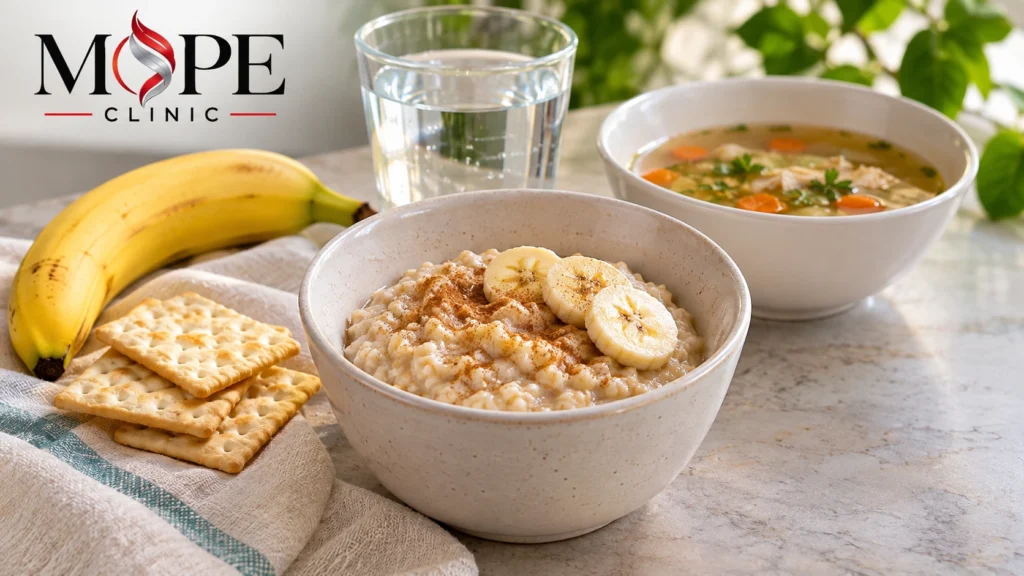
Bland foods such as toast, crackers, rice, oatmeal, or broth may be easier to tolerate temporarily.
However, severe or persistent nausea is not something to push through. Contact your prescriber if symptoms interfere with eating or drinking, especially after a medication change. Severe abdominal pain or signs of dehydration need prompt medical attention.
Why do GLP-1 medications cause nausea?
GLP-1 is a hormone involved in appetite and blood sugar regulation. Medications that act on GLP-1 pathways can help regulate appetite and may slow the rate at which food leaves the stomach.
That slower stomach emptying can contribute to fullness, bloating, and nausea. For some patients, symptoms are more noticeable when starting medication or increasing a dose.
Still, not everyone experiences nausea. Its severity varies, and nausea is not proof that a medication is working better.
According to FDA-approved semaglutide prescribing information published through DailyMed, nausea, vomiting, diarrhea, and other gastrointestinal symptoms are recognized adverse effects.
YOUR EVERYDAY FOOD GUIDE
What to eat when GLP-1 nausea hits
There is no single food that stops GLP-1 nausea for everyone. However, certain foods may be easier to tolerate during a mild episode.
Bland, simple foods
Try plain toast, crackers, rice, oatmeal, or a small baked potato. Start with a modest portion and see how your stomach responds.
Light soups
Broth-based soups may provide fluid and nourishment. Choose milder preparations when rich or spicy foods worsen symptoms.
Gentle snacks
Bananas, applesauce, or other familiar foods may be reasonable options if tolerated. Keep portions small.
Protein as tolerated
When nausea settles, try modest portions of eggs, yogurt, chicken, fish, or other protein sources that fit your dietary needs.
Remember: Bland foods can be useful temporarily, but they are not a complete long-term nutrition plan. If you cannot eat enough to meet your nutritional needs, talk with your clinician.
Foods and habits that may make nausea worse
Some people notice more discomfort after large, rich meals. Consider reducing or avoiding these triggers when symptoms occur:
- Fried or greasy foods: Large portions of fried seafood, French fries, and rich fast food may feel particularly heavy.
- Oversized meals: Eating past comfortable fullness can increase discomfort.
- Very spicy meals: Hot sauces and heavily seasoned foods may aggravate symptoms for some people.
- Alcohol: Alcohol may worsen nausea and complicate hydration.
- Eating too quickly: Slow down and notice when you begin feeling comfortably full.
Living in Greater New Orleans does not mean giving up every favorite food. Instead, pay attention to preparation, portion size, and your individual tolerance.
PRACTICAL EVERYDAY TIPS
7 simple things to try for mild GLP-1 nausea
1. Start with smaller meals
Rather than forcing a large plate, try a smaller portion. You can eat again later if you feel comfortable and hungry.
2. Slow down at mealtime
Take smaller bites, chew thoroughly, and stop when you feel comfortably satisfied.
3. Sip fluids regularly
Small, frequent sips may be easier than drinking a large amount at once. Ask your clinician about appropriate fluid intake if you have heart or kidney conditions or fluid restrictions.
4. Keep easy foods available
Stock a few simple foods you already tolerate, such as crackers, oatmeal, or soup. This can help when cooking feels unappealing.
5. Avoid lying down immediately after eating
Remaining upright for a while may reduce reflux-related discomfort for some people.
6. Keep a short symptom diary
Record when nausea occurs, what you ate, fluid intake, and whether symptoms followed a medication change. This information can help your prescriber assess the problem.
7. Discuss your dose before making changes
If nausea continues, your prescriber may need to reassess treatment, dose escalation, or other causes. Do not independently increase, decrease, or skip prescribed doses without medical guidance.
MAKE MEALTIMES SIMPLE
A simple one-day meal idea
This example is for someone with mild nausea who can still eat and drink. It is not an individualized meal plan.
Breakfast: A small bowl of oatmeal or plain toast.
Midmorning: Water in comfortable sips and a small snack if tolerated.
Lunch: A modest portion of chicken-and-rice soup.
Afternoon: A banana, crackers, or yogurt if tolerated.
Dinner: A small portion of baked fish or chicken, rice, and a cooked vegetable.
Adjust for food allergies, diabetes, dietary restrictions, and your clinician’s advice. If symptoms make balanced eating difficult for more than a short period, seek professional guidance.
IMPORTANT SAFETY INFORMATION
When GLP-1 nausea needs medical attention
Not every stomach symptom is a routine medication side effect. Some symptoms may indicate dehydration, gallbladder problems, pancreatitis, or another medical condition.
Contact your healthcare provider promptly if:
- Nausea or vomiting persists or worsens.
- You struggle to eat or drink enough.
- You develop dizziness, unusually dark urine, or reduced urination.
- Symptoms begin or become significantly worse after a dose change.
Seek urgent medical evaluation if:
- You develop severe or persistent abdominal pain, especially pain extending toward your back.
- You have significant upper abdominal pain with fever or yellowing of the eyes or skin.
- You cannot keep fluids down and show signs of significant dehydration.
Call emergency services for difficulty breathing, swelling of the face or throat, fainting, or other signs of a severe allergic reaction.
These warnings reflect recognized risks in FDA-approved GLP-1 medication labeling. Do not assume severe symptoms are normal simply because nausea is a known side effect.
Should you change your GLP-1 dose because of nausea?
Not without speaking with your prescriber. Medication plans differ, and nausea may have several causes.
For example, a clinician may review the timing of symptoms, your current dose, hydration, other medications, and any recent dose increase. That assessment helps determine whether the treatment plan needs adjustment.
Persistent nausea should not be treated as a sign that you need to tolerate more discomfort to achieve better weight-loss results.
If you are considering supervised treatment, learn more about medical weight-loss services at MOPE Clinic.
What about other GLP-1 side effects?
Nausea is only one possible digestive complaint. Some people also experience constipation, diarrhea, abdominal discomfort, or changes in appetite.
Because symptoms can overlap, it helps to consider the full picture rather than treating each complaint separately.
For more practical information, read our related article on GLP-1 constipation and everyday digestive habits.
Questions to bring to your next appointment
If you experience GLP-1 nausea, a short list of questions may make your consultation more productive.
- Could my symptoms be related to my medication or another condition?
- Should my current treatment plan be reassessed?
- How can I maintain adequate protein and fluid intake?
- What symptoms should prompt an immediate call?
- Would a registered dietitian help with my nutrition plan?
MOPE Clinic provides individualized weight-management evaluations through its physical clinic in Metairie, serving patients from Greater New Orleans and other South Louisiana communities.
FREQUENTLY ASKED QUESTIONS
GLP-1 nausea FAQs
How long does GLP-1 nausea last?
It varies. Some people experience temporary symptoms when beginning treatment or increasing a dose. Others have persistent nausea that needs medical review. Contact your prescriber if symptoms are severe, prolonged, or interfere with hydration and nutrition.
What is the best breakfast for GLP-1 nausea?
A small serving of oatmeal, toast, or another familiar bland food may be easier to tolerate. No single breakfast works for everyone, and longer-term meals should provide balanced nutrition.
Can I drink coffee while taking a GLP-1 medication?
Coffee is not automatically prohibited, but it can aggravate nausea or reflux for some people. Pay attention to your tolerance and ask your clinician about individual restrictions.
Does nausea mean the medication is working?
No. Nausea is a possible adverse effect, not a reliable indicator of treatment success. Medical progress should be assessed using appropriate clinical measures rather than side-effect severity.
Should I skip my next dose if I feel sick?
Contact your prescriber for instructions rather than changing your dosing schedule independently. The safest next step depends on the medication, your symptoms, and your clinical circumstances.
When is vomiting during GLP-1 treatment dangerous?
Repeated vomiting, inability to keep fluids down, dehydration symptoms, or severe abdominal pain requires prompt medical evaluation. Severe pain, especially when it radiates to the back, may signal a serious condition.
KEEP LEARNING WITH MOPE CLINIC
More Answers. More Confidence.
Understanding your health should not stop at one question. Explore more information from MOPE Clinic about medical weight management, nutrition, and individualized care.
Explore Weight-Loss Care
Discover how MOPE Clinic approaches individualized medical weight management through clinical evaluation and ongoing guidance.
GLP-1 & Constipation
Wondering why digestion changes during treatment? Learn about possible causes and practical habits that may help.
GLP-1 & Muscle Loss
Weight loss is about more than a number on the scale. Learn why protecting lean muscle matters during treatment.
Questions for MOPE?
Have questions about appointments, evaluations, or weight-management care? Find out how to connect with our Metairie clinic.
Helpful information. Individualized medical care. A real clinic in Metairie, Louisiana.
MOPE CLINIC | METAIRIE, LOUISIANA
Weight Management Should Come With Real Medical Guidance
Questions about GLP-1 treatment, nutrition, or side effects? MOPE Clinic offers individualized concierge weight-management care from a physical clinic in Metairie, Louisiana.
Chris Rue, FNP-C
Serving Greater New Orleans and South Louisiana
Concierge visits by appointment only. Call or text 504-265-5491. Telemedicine may be available for eligible patients depending on the service, location, and clinical requirements.
This article is general education, not a diagnosis or medical advice. Treatment is individualized and starts with an evaluation and labs.