

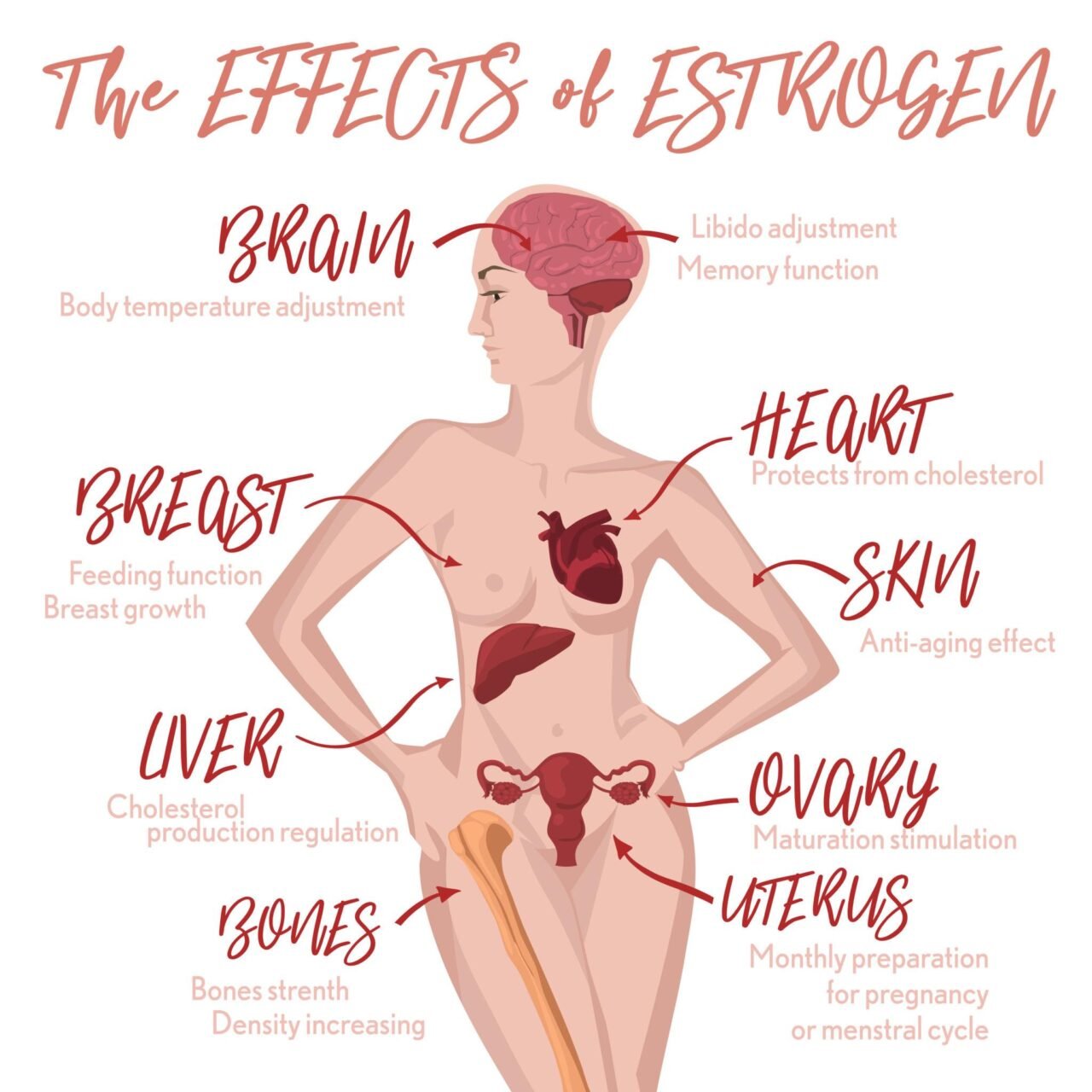
Estrogen affects tissues throughout the body—not only the reproductive system. It contributes to reproductive function and plays roles in bone, brain, blood-vessel, skin, and genitourinary health.
Its effects vary with age, sex, life stage, health history, and the specific type and amount of estrogen present. Symptoms alone cannot determine whether estrogen is too high or too low.
What Is Estrogen?
Estrogen refers to a group of related hormones, including estradiol, estrone, and estriol. Estradiol is the predominant form during much of a woman’s reproductive years. Hormone patterns change during the menstrual cycle, pregnancy, perimenopause, and menopause.
Men also produce estrogen, largely through conversion of testosterone by the aromatase enzyme. Estrogen therefore has physiological roles in both sexes. A lab result must be interpreted using the appropriate clinical context rather than compared with a single universal target.
How Estrogen Affects the Body
Estrogen helps regulate the menstrual cycle and affects the uterus, ovaries, vagina, and breasts.
Estrogen helps regulate bone remodeling. Bone loss can accelerate after menopause as estrogen levels decline.
Hormonal changes during menopause can be associated with hot flashes, sleep disruption, and mood changes.
Lower estrogen can contribute to vaginal dryness, discomfort during sex, and urinary symptoms.
Estrogen interacts with collagen, hydration, and tissue structure, although aging and many other factors also affect the skin.
Estrogen interacts with blood vessels, lipids, and metabolism, but hormone therapy should not be treated as a general strategy to prevent heart disease.
Estrogen Changes During Perimenopause and Menopause
During perimenopause, estrogen levels can fluctuate rather than decline in a straight line. Period changes, hot flashes, night sweats, sleep problems, mood symptoms, and vaginal dryness may occur. After menopause, lower estrogen contributes to changes in bone and genitourinary health.
These symptoms vary widely. Some people have few concerns, while others experience symptoms that disrupt sleep, comfort, sexual health, or daily life. Evaluation can help distinguish menopause-related symptoms from thyroid disease, medication effects, sleep disorders, anemia, and other possible causes.
Estrogen in Men
Estrogen is also relevant to men’s health, including bone and reproductive function. Levels can be affected by age, body composition, liver function, medications, and testosterone therapy. Symptoms such as breast tenderness, sexual changes, or other concerns require evaluation because they are not specific to estrogen alone.
Estrogen should not automatically be suppressed in men simply because it is present or because a number is near one end of a laboratory range. Treatment decisions should be based on symptoms, reliable testing, and the overall clinical picture.
When Testing May Be Useful
Hormone testing is most useful when it answers a defined clinical question. A clinician may consider symptoms, menstrual or menopause status, pregnancy possibility, medications, testosterone use, and other health conditions before selecting a test.
One result may not tell the full story because hormone levels can fluctuate. The laboratory method, timing, and reference range also matter. More testing is not automatically better; focused testing and thoughtful interpretation are the goal.
Hormone Therapy Requires Individual Risk–Benefit Review
Estrogen-containing therapy may be considered for certain symptoms and conditions, but it is not appropriate for everyone. The formulation, dose, route, whether a person has a uterus, personal and family history, age, and timing relative to menopause can affect the discussion.
Potential benefits, limitations, risks, alternatives, and monitoring should be reviewed with a qualified healthcare professional. Hormone therapy should not be marketed as a guaranteed way to reverse aging, prevent every chronic disease, or make the body “perform at its best.”
Women’s Health.gov: Menopause and Health
FDA Menopause Information
Frequently Asked Questions
Is estrogen only important for women?
No. Women generally have higher levels during reproductive years, but men also produce and use estrogen. Its functions and expected ranges differ by sex, age, and clinical context.
Can symptoms prove that estrogen is low or high?
No. Symptoms overlap with many conditions. A diagnosis requires clinical evaluation and, when appropriate, properly interpreted testing.
Does “estrogen dominance” have one accepted medical definition?
No. The phrase is used in different ways and can oversimplify complex hormone patterns. Ask what specific diagnosis, symptom, or test result a provider means when using it.
Should estrogen always be lowered during testosterone therapy?
No. Estrogen has important functions in men. Decisions about testing or treatment should be based on symptoms, results, and individual clinical assessment—not a blanket rule.
Is hormone therapy the only option for menopause symptoms?
No. Hormonal and nonhormonal options may be available depending on the symptom and the person’s history. A clinician can help compare appropriate choices.
Discuss Hormone Concerns With MOPE Clinic
MOPE Clinic offers appointment-based care in Metairie. Chris Rue, APRN, FNP-C, reviews symptoms, history, goals, and relevant testing before discussing whether treatment may be appropriate.
This information is educational and does not replace medical advice, diagnosis, or treatment. Treatment recommendations require an individual clinical evaluation. Results vary, and not every patient is a candidate for hormone therapy.