

Weight management • Metairie, Louisiana
Why Some People Can’t Lose Weight Even When Dieting
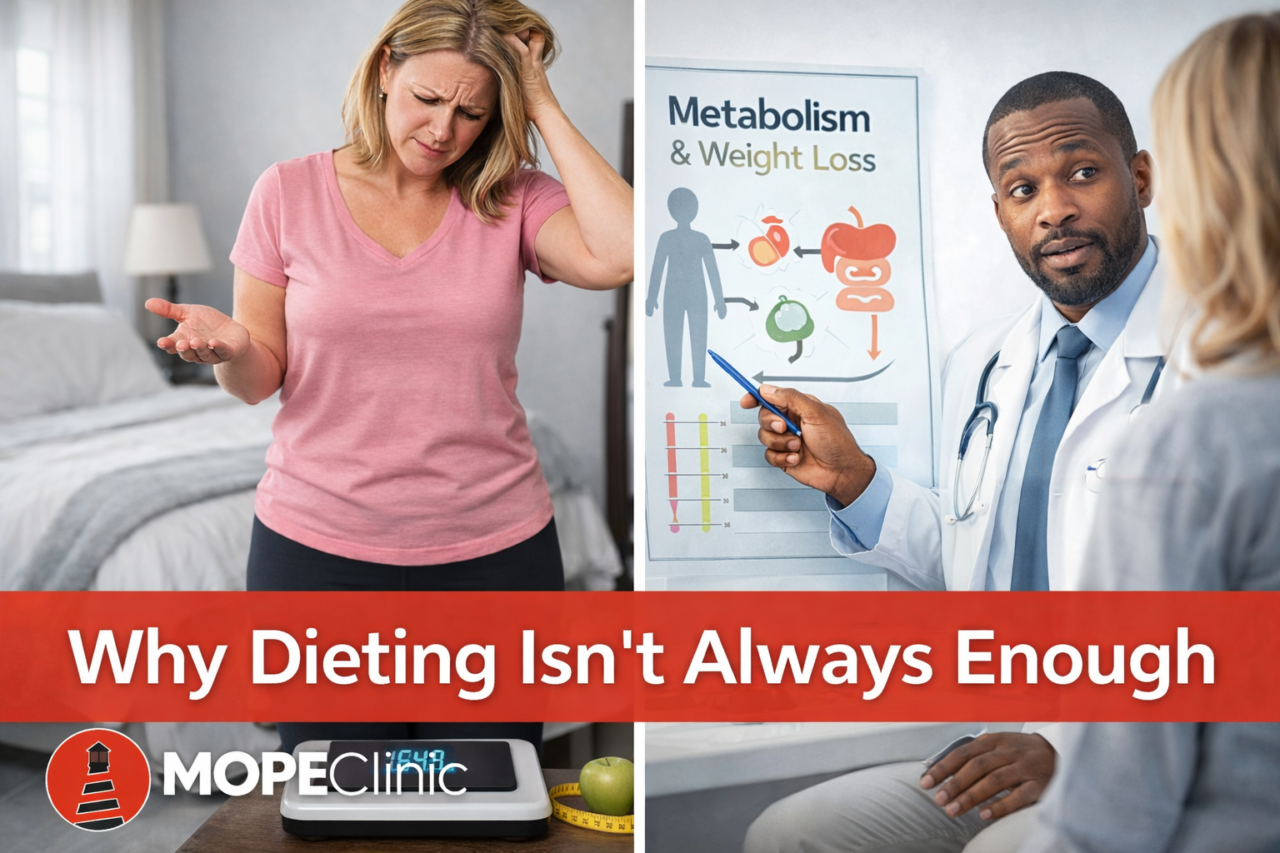
If you can’t lose weight even when dieting, it does not automatically mean a hormone disorder—or a lack of willpower. Weight changes reflect energy intake and use, but sleep, medications, health conditions, food environment, genetics and the body’s response to weight loss can make that balance harder to manage.
A Weight-Loss Plateau Is Not Proof That Your Metabolism Is Broken
As body weight decreases, the body generally needs fewer calories to maintain its new size. People may also move less without noticing, while hunger can increase. This response is sometimes called metabolic adaptation.
Metabolic adaptation can make continued loss more difficult, but it does not mean the laws of energy balance have stopped working. It means the plan may need to be reassessed with realistic measurements, adequate nutrition and sustainable activity.
Six Factors Worth Reviewing
Food and drink patterns
Cooking oils, beverages, restaurant portions, weekend eating and frequent small bites can add more energy than expected without anyone being dishonest or careless.
Daily movement
Structured exercise matters, but so do walking, standing, household work and other movement throughout the day.
Sleep
NIDDK notes that insufficient sleep is linked with weight gain and may increase hunger, calorie intake and preference for less nutritious foods.
Medications
Some medicines used for depression, seizures, diabetes, blood pressure, allergies and inflammation can contribute to weight gain. Never stop a medicine without the prescribing clinician.
Health conditions
Hypothyroidism, PCOS, Cushing syndrome, depression and certain other conditions may contribute. These are not the cause of every plateau and require proper evaluation.
Environment and genetics
Work schedules, food access, caregiving, chronic stress and inherited differences can influence appetite, activity and weight regulation.
For a balanced overview, see NIDDK’s review of factors affecting weight and health.
Can Hormones Affect Weight Loss?
Hormones participate in appetite, blood-sugar regulation, reproduction, stress response and energy use. However, broad phrases such as “hormone imbalance” do not establish a diagnosis.
Symptoms and history help determine whether targeted evaluation makes sense. Testing every hormone panel in every patient is not automatically helpful. Likewise, correcting a confirmed hormone disorder does not guarantee a particular amount of weight loss.
Low testosterone, thyroid disease, PCOS and other conditions should each be evaluated according to appropriate clinical criteria rather than assumed from fatigue or weight gain alone.
What About GLP-1 and Other Weight-Management Medications?
Prescription weight-management medications work in different ways. Some reduce appetite or help a person feel full sooner. GLP-1–based medicines are among the available options, but no medication is appropriate for everyone.
NIDDK explains that clinicians consider factors such as BMI, weight-related health conditions, possible benefits, side effects, current medicines, family history and cost. Medication is generally used with nutrition, activity and behavior changes—not as a replacement for them.
Benefits and side effects vary by medication and patient. Pregnancy, certain medical histories, medication interactions and other factors may change eligibility. Review NIDDK’s prescription weight-management medication information.
What to Track Before Your Appointment
- Weight trend
Use similar conditions and look at several weeks rather than daily fluctuations. - Food and beverages
A short, honest record can reveal patterns without turning eating into punishment. - Sleep
Note bedtime, wake time, snoring, daytime sleepiness and shift-work changes. - Movement
Include workouts, steps, sitting time and changes caused by pain or work. - Medicines and supplements
Bring names, doses and when each one started. - Symptoms and history
Record meaningful changes and relevant family or medical history.
How MOPE Clinic Approaches a Weight-Loss Plateau
MOPE Clinic is a LegitScript-certified, cash-pay concierge clinic with a physical office in Metairie. Chris Rue, APRN, FNP-C, reviews the patient’s goals, health history, current medicines and previous efforts before discussing appropriate options.
Testing is individualized to the patient and proposed care. When laboratory work is appropriate, patients may use their preferred lab location. A plan may address nutrition, activity, sleep, medical conditions, medication options or referral needs depending on the evaluation.
Telemedicine may be available for eligible weight-management patients. Availability depends on the service, the patient’s location and applicable clinical requirements. MOPE is not a virtual-only provider.
Learn more about medical weight-management services at MOPE Clinic or read how metabolic syndrome is evaluated.
Frequently Asked Questions
Why can’t I lose weight even when dieting?
A plateau may reflect lower energy needs after weight loss, portions, reduced movement, sleep, medications, health conditions or several factors together. A clinician can help decide whether medical evaluation is appropriate.
Does a plateau mean my metabolism is damaged?
Usually, no. Energy needs can decrease as weight falls, and the body may adapt in ways that make further loss harder. That is different from saying the metabolism is permanently broken.
Can hormones stop weight loss?
Hormonal and metabolic conditions can influence weight, but they do not explain every plateau. Symptoms, history and appropriate testing are needed before diagnosing a condition.
Do GLP-1 medications help everyone lose weight?
No. They help some eligible patients, but response and side effects vary. A clinician should review medical history, medications, risks, goals and follow-up needs.
Should I stop a medicine that may cause weight gain?
No—not on your own. Ask the prescribing clinician whether the medicine may be contributing and whether a safe alternative or other strategy exists.
Does every patient need labs or an in-person first visit?
No universal rule applies to every patient or service. Testing and visit format depend on history, symptoms, proposed care, location and applicable clinical requirements.
Get a More Complete Weight-Management Review
If your progress has stalled, call or text MOPE Clinic at 504-265-5491. Concierge visits are available by appointment only.
Physical Metairie clinic • Personalized treatment plans • LegitScript-certified • Not a virtual-only provider
This article is educational and does not replace individualized medical advice. Treatment eligibility and results vary.